
Introduction

If you've decided to offer independent transaction coordinator (TC) services to real estate businesses, one of the first things you need to determine is your fees.
When a broker or real estate agent hires a transaction coordinator, they can expect to pay an average of $300 to $500 per month, and onboarding fees are generally around $125.
However, your pricing will depend on the level of transaction coordination services you provide, the hours you put in, and the number of transactions you manage.
In this quick guide, we'll unpack some common TC pricing models, factors to consider when setting your TC fees, and how to adjust your pricing as your business grows. We've also included some real-world examples of real estate transaction coordinator pricing.
Common Transaction Coordinator Pricing Models
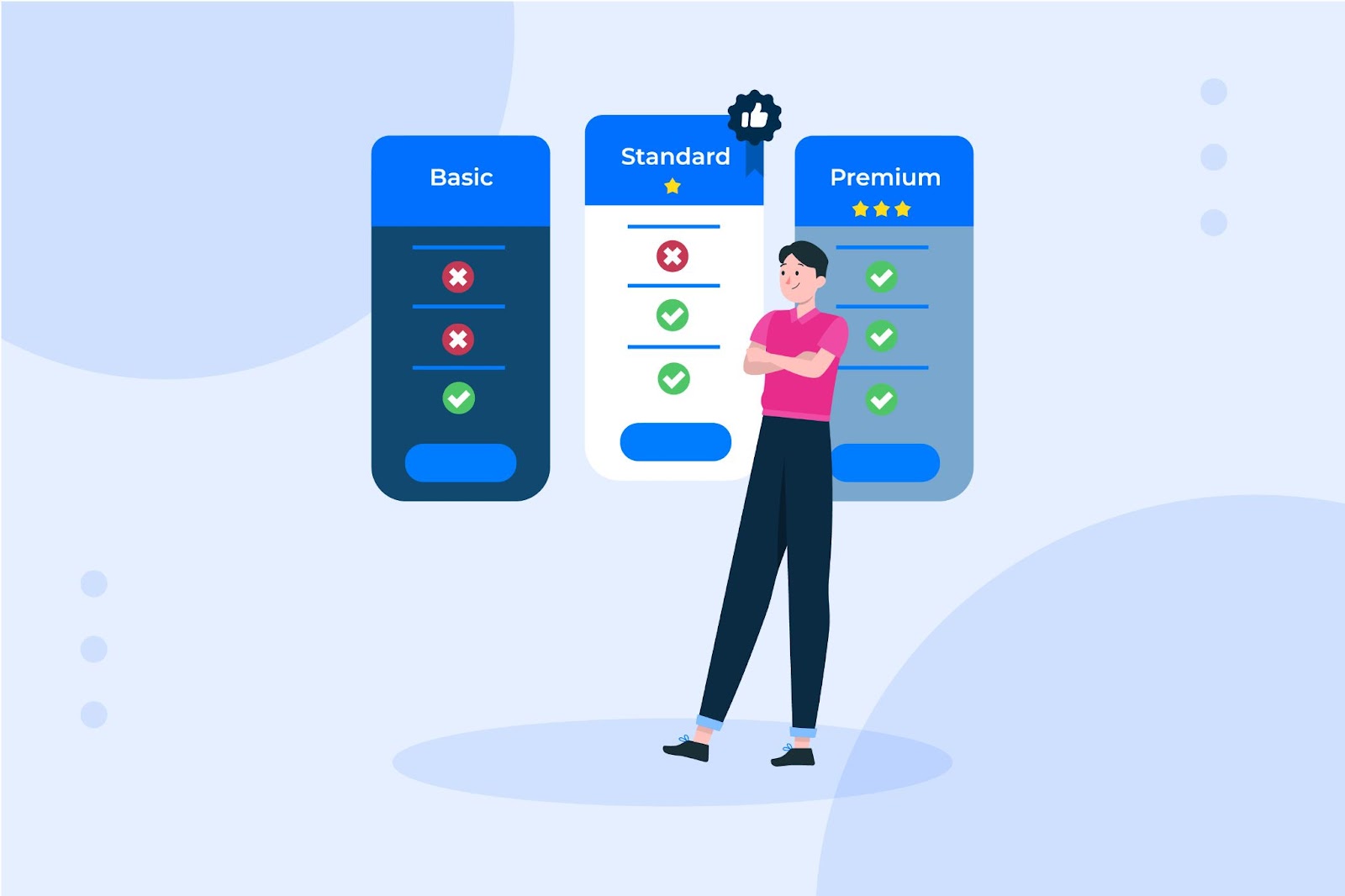
When setting your transaction coordinator fee, you can use one of several pricing models. The right approach will depend on your experience, services offered, and client experience. Below are the most widely used pricing structures:
Per transaction fee
Many TCs charge a set fee per real estate transaction, making this one of the most straightforward pricing models. This fee typically covers coordinating a single real estate deal from contract to closing.
The per transaction model is appealing to brokers and real estate agents because they only pay when they have a deal in progress, and it allows TCs to predict income based on their transaction volume.
Flat monthly fee
Some transaction coordinators opt for a flat monthly fee, providing unlimited services for a fixed price.
This model works best for a real estate agent or broker with a high transaction volume and who needs ongoing support.
It provides stable, recurring revenue for the TC and can encourage long-term client relationships.
Tiered pricing
A tiered pricing model offers different service levels and varying price points. For example, a basic package might include contract management only, while a premium package could include additional support, such as compliance reviews, client communication, or marketing assistance.
This approach allows brokers and agents to choose the level of service that fits their needs and budget.
A la carte pricing
For those who want maximum flexibility, an a la carte model allows clients to pay only for the specific services they need.
This could include document review, scheduling inspections, or drafting disclosures.
TCs who use this model can tailor their services to each transaction, but transparent pricing and communication are required to avoid confusion.
Hybrid pricing
Some transaction coordinators blend multiple pricing models to create a customized structure.
For instance, they may charge a per-transaction fee for standard services but offer add-ons for an additional cost.
Others might provide discounts on the TC fee charged based on transaction rates for brokers or agents who commit to a monthly retainer.
Factors to Consider When Setting Your Rates

When determining your rates, you should consider several factors to ensure your pricing is competitive, sustainable, and reflects the value you provide. Below are the most important factors to keep in mind:
1. Experience and expertise
TCs with more experience, specialized knowledge, or certifications can justify charging higher rates. If you have expertise in handling complex transactions, you can position yourself as a premium service provider.
2. Scope of services
A basic contract-to-close service will typically have a lower fee than a package that includes reviews, communication, and support.
TCs who offer add-on services, like listing coordination or admin, may want to opt for tiered or a la carte pricing.
3. Real estate market
Pricing varies by region due to differences in real estate market conditions, transaction complexity, and agent commission structures.
TCs in high-cost or high-volume markets can charge more than those in smaller or rural areas with lower transaction volumes.
4. Competition and industry standards
Researching what other TCs in the area charge helps you set competitive rates. Charging too little can undervalue services, while pricing too high may deter potential clients.
Networking with other TCs or licensed real estate professionals can provide insight into standard pricing.
5. Agent and brokerage clientele
Understanding your target clients is crucial. Solo agents, teams, and brokerages all have different budgets and expectations.
Some brokerages may prefer flat fees for consistency, while individual agents may favor per-transaction pricing, so consider the needs of who you're aiming to target with your services.
6. Transaction complexity and volume
The complexity of the real estate transactions handled should also influence your pricing. A standard residential sale requires less effort than a luxury or investment transaction with multiple contingencies.
7. Business expenses and profitability
To ensure profitability, you need to factor in your operating costs, such as software, insurance, training, and marketing. Your rate should cover your expenses while allowing room for growth.
Real-World Examples of TC Fees

Below, let's explore what some real-world transaction coordinators are charging for their services.
First off, in-person hourly rates typically fall between $40 and $55. Virtual TCs charge rates of anything between $7 to $15 per hour. Additionally, TCs might charge from $300 to $800 per transaction.
AgentUp

AgentUp is an on-demand virtual real estate transaction coordination service. They have some of the most qualified TCs in the industry, with expertise in the U.S. real estate landscape.
Their per-transaction coordination fee is $299 per file, and listing coordination starts at $199 per listing.
Transactly
Transactly offers comprehensive TC services to streamline the transaction process. Their services are priced at $49 monthly for one to three transactions per year.
Empower Transactions

Empower Transactions provides TC solutions for agents, teams, and brokers. They position themselves as a provider of highly trained and skilled transaction coordinators.
Their contract-to-close fee is $400 per file, and their concierge plan starts at $3,250 per month for up to 10 transactions.
How to Adjust Your Pricing As Your TC Business Grows

As you grow your business, you should periodically adjust your pricing to reflect your experience, demand, and operating costs. Here's how you can strategically update your rates:
Increase rates gradually: Raise your prices incrementally to avoid surprising existing clients. Ensure you notify clients before any rate adjustments, and justify increases by highlighting added value.
Adjust for experience and expertise: Charge higher rates as your skills improve and your efficiency increases. Consider premium pricing for specialized transactions - such as luxury or commercial real estate - -and obtain certifications or additional training to justify rate increases.
Review market trends and competitor pricing: Regularly research industry pricing to stay competitive. You can adjust your rates based on local market conditions and the demand for TC services.
Introduce new pricing models: Shift from a per-transaction model to a tiered or retainer-based pricing as your client base grows. You can also offer bundled service packages to provide more value while increasing revenue.
Factor in increased business costs: If you're hiring assistants or expanding, you need to ensure your fees will cover additional costs. You should also include inflation adjustments in your annual pricing reviews.
The Four Pricing Models, Compared Head to Head
Every TC pricing structure boils down to one of four models. Here's how each behaves when your file count goes up or down, so you can pick the one that matches your risk tolerance.
Per-file flat fee
You charge a fixed amount per transaction, commonly $300 to $800, collected either up front, at contract, or at closing. It's the easiest model for clients to understand and compare against a competitor's quote.
Income scales directly with volume: 10 files at $400 nets $4,000, 20 files nets $8,000. The risk is that a slow month with 3 closings pays you almost nothing, even though you still cover software, phone, and admin costs. Complex files (short sales, 1031 exchanges, new construction) take far more hours than a standard resale but pay the same flat rate unless you build a complexity surcharge into your contract.
Tiered packages
You publish two or three fixed packages (for example Basic, Standard, Full-Service) at different price points, each with a defined scope. Clients self-select based on how much hand-holding they want.
This fits agents who want predictable costs and TCs who want to upsell: a client who starts on Basic often upgrades once they see how much time compliance review or client communication saves them. The income effect is similar to flat-fee, but average revenue per file tends to run 20 to 40 percent higher because the upper tiers carry more margin.
Monthly retainer
A broker or team pays a fixed monthly amount for coordination across an agreed volume band, such as up to 10 files a month, with an overage rate for anything beyond that (commonly $50 to $100 per extra file).
Retainers work best with brokers or teams that produce a steady, predictable file count. Your income is smooth and recurring even in a slow closing month, which makes it easier to budget and to justify hiring help. The downside: if the client's volume drops well below the agreed band for several months running, you're still doing the admin and marketing work of holding the relationship for less revenue than a per-file model would have paid, so retainer contracts should include a minimum term and a volume review clause.
Hourly
You log time and bill against it, typically $25 to $55 an hour depending on whether you're licensed, virtual, or in-market. It's the fairest model for unusually complex or messy files, since effort and pay stay linked.
Hourly is hardest to scale profitably: your income caps at the number of billable hours in a week, and clients often push back on invoices they can't predict in advance. Many TCs use hourly only for one-off add-ons (rush jobs, file cleanup, audits) layered on top of a flat-fee or tiered base, rather than as their primary model.
What to Include at Each Tier
Vague scope is the single biggest cause of TC-client disputes. Build a written scope ladder so both sides know exactly what a fee covers, and what triggers an extra charge.
Basic tier: contract-to-close coordination and deadline tracking
Opening the file, entering key dates, tracking inspection, financing, appraisal, and closing deadlines, sending milestone reminders, and confirming the file closes with all required signatures collected. This is the floor of what any paid TC service should include.
Mid tier: adds compliance review and document chasing
Everything in Basic, plus reviewing every document against your broker's compliance checklist, flagging missing initials or unsigned addenda, and actively chasing agents, lenders, and title companies for outstanding documents rather than just tracking that they're missing. This tier justifies a meaningfully higher fee because it shifts real liability-reducing work from the agent to the TC.
Full tier: adds listing coordination and client communication
Everything in Mid, plus pre-listing paperwork, entering and updating the MLS listing, coordinating photography and sign installation, and handling direct communication with the buyer or seller (status updates, scheduling) on the agent's behalf. Because this tier puts you in front of the client, it typically commands the highest per-file or retainer rate and should only be offered once you have a documented communication protocol the agent has approved.
Outside scope at every tier, and billable separately: marketing collateral design, CRM data entry unrelated to the transaction, notary or courier runs, weekend or after-hours rush handling, and any work on a file after it falls out of contract and has to be relisted. Put this exclusion list in your engagement agreement so a client can't assume it's bundled in.
Who Pays the Fee, and How It's Handled at Closing
There are three common payment structures, and each has different disclosure and settlement implications.
Agent-paid: The agent hires and pays you directly out of their commission, usually by invoice after closing or on a retainer schedule. This is the simplest structure administratively since you have one billing relationship and the fee never touches the settlement statement.
Broker-paid: The brokerage contracts with you directly, often for all or most of its agents, and pays you on a retainer or per-file basis from brokerage funds or a deduction from agent commission splits. This structure needs a written agreement between broker and agent covering who absorbs the cost when a file falls through.
Charged to the client at closing: The TC fee is added as a line item on the closing statement and paid out of the seller's or buyer's proceeds. This is where you need to be careful. Fees passed through to a consumer at closing can raise questions under RESPA about permissible charges and required disclosures, so any arrangement where the client (rather than the agent or broker) is paying should be confirmed in writing with the broker or a compliance advisor before you set it up, and disclosed to the client up front, not added as a surprise line item at the closing table.
Whichever structure you use, put it in writing: who is the paying party, when payment is due, what happens to the fee if the transaction terminates before closing, and how the fee appears (or doesn't appear) on the settlement statement.
Rate Benchmarks and What Moves Them
Published rates vary widely because they blend very different scopes and markets. As a rough guide: standard residential contract-to-close runs $300 to $500 per file in most markets, complex files (new construction, short sale, luxury, commercial, 1031 exchange) run $500 to $1,200 or hourly on top of a base fee, and full-service packages that add listing coordination or client-facing communication typically add $150 to $300 on top of a contract-to-close base.
Region matters: TCs in high-cost, high-volume metro markets can generally charge 20 to 50 percent more than TCs in smaller or rural markets, reflecting both agent commission size and local cost of living.
Factors that justify charging above the median for your market:
- Licensed versus unlicensed: A licensed TC can typically justify a higher rate than an unlicensed one because some tasks, depending on the state real estate commission's rules, may only be performed by a licensee.
- Listing-side work: Coordinating a listing from intake through MLS entry to executed contract is materially more work than contract-to-close alone and should be priced as its own line item, not folded into a flat fee.
- Compliance review: TCs who actively check files against a broker's compliance checklist and catch errors before a broker audit are taking on liability-reducing work worth a premium over deadline tracking alone.
- Volume commitments: A broker or team guaranteeing a minimum number of files a month can often negotiate a lower per-file rate in exchange for the predictable income a retainer or bulk tier provides.
- Turnaround guarantees: Committing to same-day document review or 24-hour response times is a service-level commitment worth charging for, since it usually means keeping capacity in reserve rather than filling every hour.
How to Raise Your Rates Without Losing Clients
Rate increases fail when they arrive as a surprise or aren't tied to anything the client can see. A few rules reduce pushback:
Timing: Raise rates at a natural boundary, such as the start of a new year or contract renewal, rather than mid-relationship. This gives the increase a logical reason instead of feeling arbitrary.
Notice period: Give existing clients 30 to 60 days' written notice before a new rate takes effect. This is long enough for a broker or agent to budget for it and short enough that you're not locked into old pricing for another full year.
Frame around scope and results: Tie the increase to something concrete you've added or improved, such as faster turnaround, a new compliance step, or expanded hours, rather than presenting it as a flat cost-of-living bump. Clients accept "the service now includes X" far better than "everything costs more now."
Grandfather selectively: Consider holding your best, longest-tenured clients at their current rate for a defined period (say, another 6 to 12 months) while applying the new rate to all new business immediately. This protects loyal relationships while still moving your overall book toward the higher rate.
When a client refuses: Offer to hold the old rate in exchange for a concession that reduces your cost to serve them, such as a minimum monthly volume commitment or moving them to a lower service tier. If neither works and the account isn't profitable at the old rate, it's reasonable to let that client go rather than subsidize them with time you could spend on better-paying files.
Worked Earnings Examples
Here's the math across two common pricing models at three volume levels, using a mid-market $400 per-file rate and a $3,000-a-month, up-to-15-file retainer as reference points.
Per-file model at $400/file
- 10 files a month: $4,000 gross. Comfortably manageable solo, roughly 4 to 6 hours per file including admin and communication.
- 25 files a month: $10,000 gross. This is close to the ceiling most solo TCs can sustain without errors creeping in; many TCs report needing to bring on a part-time assistant or a second TC somewhere between 20 and 25 active files a month.
- 40 files a month: $16,000 gross, but this volume is not realistically solo. Expect to need at least one full-time or two part-time support TCs, whose pay comes out of that gross, so net income per file drops even as total revenue rises.
Retainer model at $3,000/month for up to 15 files
- 10 files a month: $3,000 gross, an effective rate of $300 per file. Lower than the per-file model at this volume, but predictable.
- 25 files a month: $3,000 base plus 10 files over the 15-file band at, say, $75 overage each, totals $3,750. Notably lower than the $10,000 the per-file model would generate at the same volume, which is why retainer contracts need an overage rate that scales with real effort, not a token amount.
- 40 files a month: The retainer as structured badly underprices this volume ($3,000 plus 25 overage files at $75 is $4,875 versus $16,000 per-file), which is exactly the scenario that should trigger a renegotiation clause or a move to a higher retainer band before volume gets there, not after.
The practical takeaway: retainers protect you in slow months and per-file pricing rewards you in busy ones, so build in a contractual trigger, such as a volume review every quarter, that lets you renegotiate before a retainer client's growth quietly erodes your margin.
The Ultimate Tool for Transaction Coordinators
The right software is one of the most important things you'll need as a transaction coordinator.
Transaction management software allows you to run a successful and profitable TC business while impressing your clients and allowing you to charge premium rates.
Paperless Pipeline is purpose-built real estate transaction management software designed to help TCs manage the entire process, from listing to closing.
Attract more clients, build your business, and close deals smoothly with the help of our software. Visit our website for a free 14-day full-feature trial to see if our platform is the right solution for your TC business.