
Learn how to recruit real estate agents and retain the best talent.

There are over three million active real estate agents in the U.S., giving you a large pool of talent to recruit from. You'd think that this would mean recruiting top agents would be easy, but the opposite is true.
Whether you're in the residential or commercial real estate industry, recruiting real estate agents is challenging and time-consuming.
In this article, we'll discuss how to create an effective recruitment process, including what attracts top real estate agents, the best ways to recruit them, and how to retain them once they're working for you.
How to Recruit Potential Agents
In any industry, finding good people is the key to success - and real estate is no different. Signing top producers to your real estate brokerage or team will give you a competitive advantage and help you sustain long-term growth.
This is because great real estate agents are committed to building a healthy pipeline, closing transactions, and maintaining a robust network of happy clients.
This level of commitment is why top-producing real estate agents earn more than four times what their novice peers bring in.
Top-performing agents also offer specialized knowledge and extensive experience, resulting in hassle-free closings, valuable referrals, and repeat clients.

The real estate recruitment challenge
The problem is that the best agents are almost always employed. For this reason, these highly sought-after professionals are rarely in between jobs.
To overcome this, recruiters must have a process for nurturing long-term relationships with talented real estate agents. This ensures that your brokerage is the one top talent considers when they're ready to move.
Unfortunately, many brokers put recruitment on the back burner when they should prioritize it to ensure they maintain a funnel of desirable prospective agents.

How to Create Your Real Estate Agent Recruiting Process
A successful real estate agent recruitment strategy hinges on a deliberate and well-structured process that consistently nurtures relationships with agents until they're ready to move.
We recently spoke to real estate industry veteran and top recruiter, Robb Campbell. He shared his real estate recruiting strategy with us.
To summarize, the seven steps are:
- Buy or create a database of real estate agents with the experience you need in your area.
- Hire someone to perform outreach calls and get real estate agents to commit to a 15-minute conversation with you.
- During the scheduled call, ask the agent how business is going and about their future.
- Try to organize an in-person meeting. Tell the agent that you know they're happy where they are and that you want to build a relationship in case anything changes in the future.
- At the meeting, tell them about your real estate business.
- Hire someone else to follow up with the agent after the meeting to see if they need more information.
- If the agent isn't ready to move yet, maintain contact by steadily providing them with updates and other information.
Robb says that with this system, every agent he speaks to thinks of him when they eventually consider moving brokerages.

3 Ways to Find Out What Talented Agents Want
Successful recruiting involves a deep understanding of their values and priorities. Here are some of the ways you can find out what they want from their career:
1. Get out and meet them
A helpful way to find out what great agents want from a brokerage is simply to ask them.
Find top-producing agents in your area or niche and ask them what would make them consider moving to a new brokerage.
2. Understand what motivates agents
Some agents actively seek a new company to work for, while others only consider a move if it comes their way. Knowing how to pitch to different agent mindsets is critical.
For example, agents not looking for a new brokerage are likely happy where they are, but earning more under the same conditions may favor them.
3. Offer more than just money to real estate agents
Top-performing agents are increasingly motivated by flexibility, mobility, and opportunities for professional development.
Agents may be interested in training and development opportunities, additional support and mentoring, and flexible working arrangements.
4 Ways to Find Great Agents

Placing job postings online will get you many applications - but they are unlikely to be from top agents.
To find the best real estate agents and diverse candidates, you must cast a wider net and be more proactive and creative in your recruitment techniques.
Here are a few ways to do this:
1. Attend real estate industry events
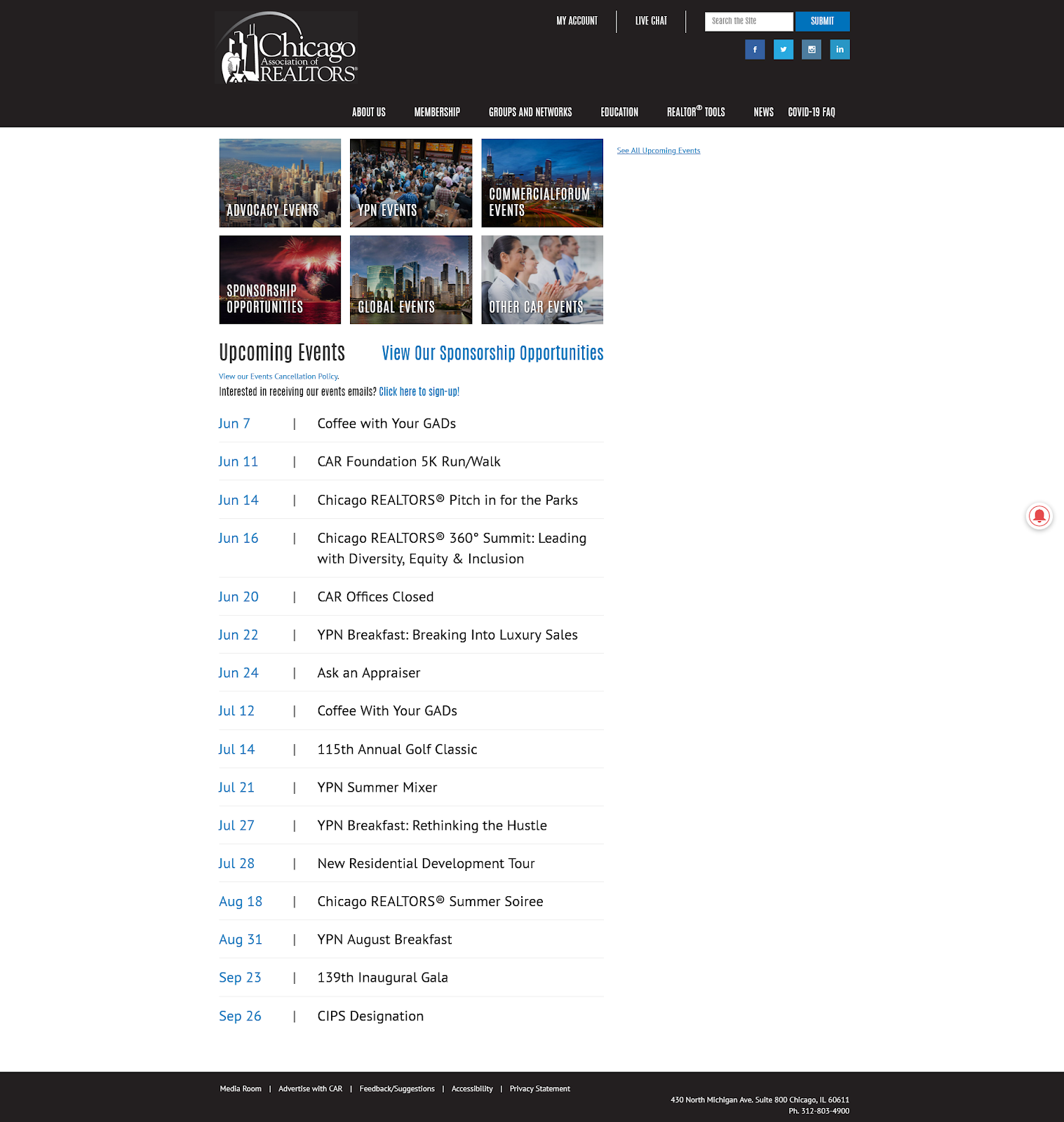
Attending industry events is a good way to meet agents. Your local real estate association usually holds regular networking, professional development, and lobbying events.
Here is a great example from the Chicago Association of Realtors. The organization hosts various events throughout the year:
2. Use social media
Social media is a great way to extend your company's reach beyond your website or word of mouth. The same goes for your agent recruitment.
Regularly publish posts that celebrate your agents. Below is a great example from Asheville Realty Group's Facebook page:

You could also create campaigns aiming to get more real estate agents to follow your brokerage. This could include guides to becoming a realtor or the latest regulatory changes for agents.
Here's a good example from Diane McCown's Facebook page:

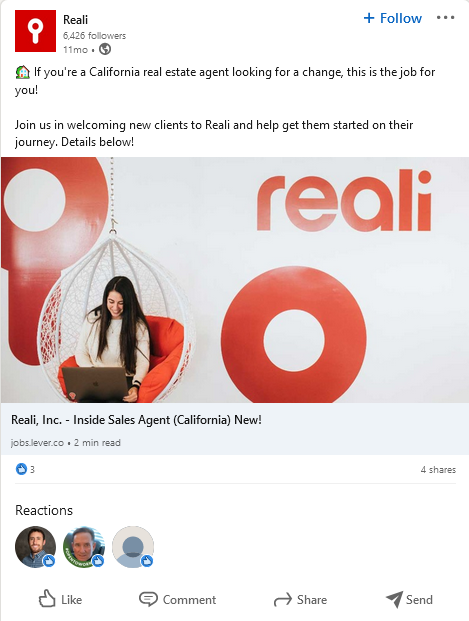
When it's time to recruit, post a link and include a personal message asking if anyone is interested. Here's a great example from Reali on LinkedIn.
3. Offer sign-up bonuses
Offer bonuses to agents and staff who refer a new agent who signs up with the brokerage. This empowers your staff to recruit agents themselves.
4. Host real estate agent events
Whether in real estate or another sector, people get excited about joining a well-known company. Consider hosting events that seek to build these types of relationships.
You could host talks with veteran agents about their journey to success or with accountants about maximizing income and lowering taxes.
Real estate agents may find these topics valuable and compelling, making them more likely to attend your event.
9 Ways to Retain Producing Agents

Attracting great agents is only one part of the process. Once they have joined your brokerage, you'll need to create an environment that keeps them at your company. Here are some tips on how to do this:
1. Offer a simple transaction process
Top-producing agents love simple tools because they don't require hours of learning, using, or maintaining them.
Whether it's your broker transaction management software, intranet system, customer relationship management (CRM) software, form tools, or anything else, experienced agents want to get in and out as quickly as possible.
2. Offer adaptable technology
Many brokerages insist that their agents use specific tools or software, either because they provide comprehensive solutions or to keep all leads under the company's control.
Imagine meeting with a top agent and telling them that to work with your brokerage, they must learn a new process and give up the tools and workflows that have made them successful.
Instead, offer technology solutions that allow them to continue operating in the way that suits them best.
3. Offer tools that increase agent productivity
Some real estate agents may need tools to help them increase their productivity. Consider implementing transaction management systems that are easy to learn and use.
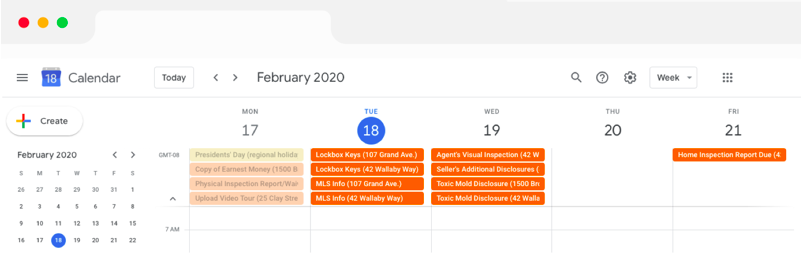
Additionally, you can use tools that offer automated task reminders based on the most critical transaction milestones, such as acceptance, close date, loan approval date, or option period.
It's essential to ensure that your systems can automatically sync with your new agents' calendars, which you can do with Paperless Pipeline:
4. Provide insightful production reports on demand
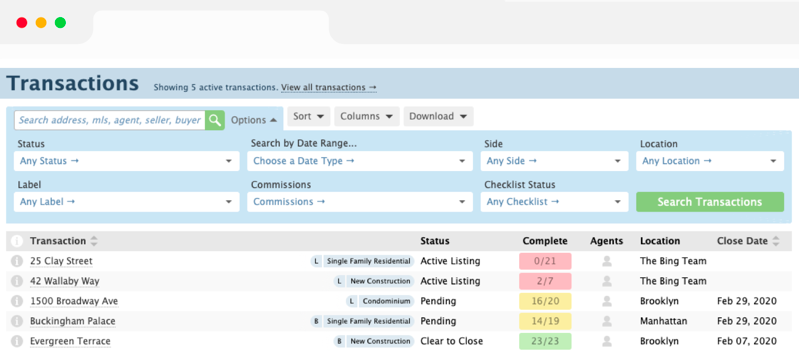
Real estate agents need regular and detailed production data to work effectively. Offer agents the ability to quickly view their production and hone in on deals that are missing critical documents or require attention.
Ensure that they can view these reports, filter and sort results, and access the exact information they need when they need it. All of this can be done with Paperless Pipeline:
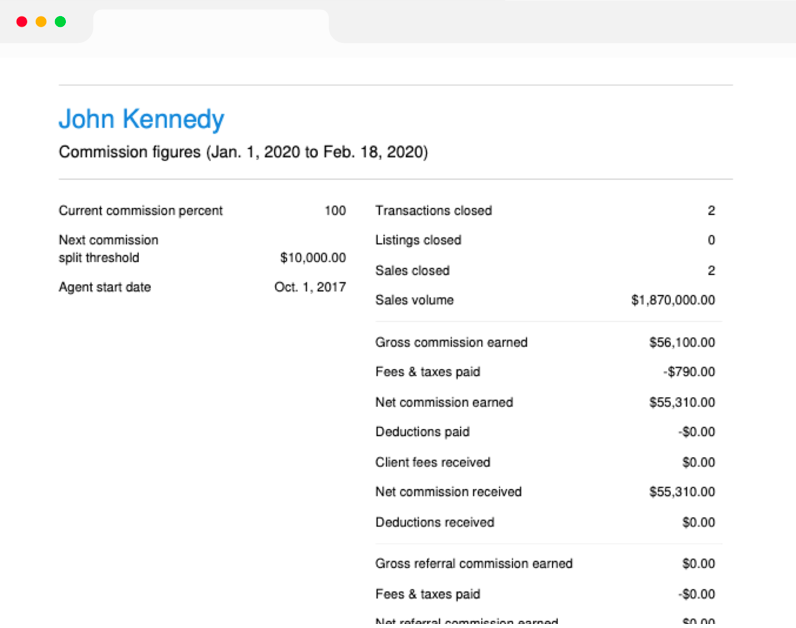
5. Provide access to income statements in real-time
When it comes to the end of the year, brokers aren't the only ones rushing to get ready for tax season. Agents feel the same pressure and want their financial information quickly and on time.
Consider providing automated monthly financial reports with the previous month and year-to-date information on gross and net income from the commissions they've generated.
Take it a step further and make it clear to agents that they can also view all of their financial information in real time.
Here's an example of an income statement using Paperless Pipeline:
6. Offer commission structures that motivate
Brokerages generally offer two standard commission structures to agents: splits or flat fees.
It's essential to consider your commission structure and evaluate whether it motivates agents to perform.
For example, higher-than-typical commission splits can encourage agents to continue finding new clients as every sale grows their income.
7. Offer attainable commission plan incentives
Offering commission plans with incentives is a great way to recruit agents looking to increase their earnings.
For example, some brokerages offer different splits based on the lead source - in other words, they get a more favorable split if they generate the lead themselves. Top agents love this incentive, as they receive a lot of referrals and repeat clients.
8. Support your agents
We mentioned earlier that celebrating agents will attract talent. But it's even better for retaining agents.
Consider shout-outs on social media, annual events to highlight the top producers, and rewards for productivity.
Be sure to offer this incentive to new real estate agents who are rapidly establishing their reputation or to those who have demonstrated significant efforts to improve themselves.

9. Support team opportunities
Experienced agents are often ambitious and continually looking to the future. Many have their sights set on building their own brokerage or team.
If you are an owner-producer, you may not want to share leads. This can result in seasoned agents feeling like they are being held back, and they may eventually look for other opportunities.
Make a point of supporting your agents and their goals. Help them develop top-producing teams to take your brokerage to the next level.
Why Agents Leave and What Makes Them Stay Through the First 90 Days
Most brokerage changes are decided in the first 90 days of a new hire, even when the agent doesn't act on it for another year. Understanding why agents leave in the first place tells you what to fix before recruiting your next round.
Why agents leave
- Confusing or delayed commission statements that make agents question whether they're being paid correctly.
- Slow, paper-heavy transaction processes that eat into time they could spend prospecting.
- A support team or broker who is hard to reach when a deal hits a snag near closing.
- Feeling like just another license number instead of someone whose production is tracked and recognized.
- Tools that were pitched during recruiting but turn out to be clunky or inconsistently used once the agent joins.
The first-90-days experience that makes agents stay
New agents form their opinion of a brokerage fast. A first 90 days that builds loyalty typically includes:
- A same-week onboarding call that gets the agent set up in your transaction management system, not a multi-week wait for a login.
- A first transaction that runs smoothly, with a checklist template already applied so the agent isn't guessing what documents or approvals are missing.
- A clear answer, in writing, to "how and when do I get paid" before their first closing, not after.
- At least one check-in from the broker or team lead around day 30 and day 60, separate from any compliance issue.
- Visible proof that production is being tracked, such as a report the agent can pull themselves rather than one they have to request.
Operational factors that reduce churn
Beyond the personal touches, three operational habits do most of the work in keeping producing agents from shopping around:
- Fast onboarding. Every day an agent waits to get access to files, forms, and their pipeline is a day they compare your setup unfavorably to wherever they came from.
- Clear commission statements. Agents should be able to see gross commission, splits, caps, and net payout for every closed file without asking staff to calculate it manually. Tools like the Commission Module in Paperless Pipeline handle splits, tiers, caps, and CDAs so agents get consistent numbers every time.
- Low-friction paperwork. Standardized document names and labels, per-transaction email-in through a Maildrop address, and a checklist that auto-calculates due dates in business or calendar days all shrink the time an agent spends on admin instead of clients.
None of this replaces relationship-building, but it removes the operational reasons a satisfied agent starts taking recruiter calls.
3 Metrics to Track Your Recruiting Effectiveness
Recruiting activity without measurement makes it impossible to know which parts of your process are working. Track these three metrics alongside your recruiting funnel:
1. Conversations per hire
Count how many 15-minute calls, in-person meetings, and follow-ups it takes, on average, to sign one new agent. If that number climbs over time, either your targeting has drifted toward agents who aren't a fit, or your pitch needs updating to reflect what agents are actually asking for.
2. Time to first transaction
Measure the days between an agent's start date and their first closed (or even first opened) transaction in your system. A long gap usually points to onboarding friction: slow system access, unclear checklists, or an agent who is still winding down business with a previous brokerage. Shortening this window is one of the clearest ways to improve early retention, since agents who close quickly see proof the move was worth it.
3. Twelve-month retention rate
Track what percentage of agents recruited in a given period are still with the brokerage 12 months later. This is the metric that tells you whether your recruiting and onboarding investment is actually paying off, and it's the number most worth comparing year over year as you change your process.
Reviewing these three metrics quarterly, alongside instant reports like Closing in 30 Days or Overdue Closings, gives you an early warning system for both recruiting bottlenecks and agents who may be drifting toward the exit.
Recruit Top Real Estate Talent with Paperless Pipeline
Paperless Pipeline is the transaction management software of choice for more than 90,000 real estate professionals.
It's purpose-built software with one goal in mind: to help the country's top brokers and agents close more deals and grow their real estate business.
With a proven blend of mobility, simplicity, and sophisticated technology, Paperless Pipeline is perfect for drawing top-producing agents to your company and retaining them for years to come.
Try Paperless Pipeline for free today without a credit card or commitment, and see why the country's top brokerages trust this software to help them recruit and retain successful agents.