How Digital Transformation In Real Estate Is Changing The Way Agents And Brokers Work In 2025

Real estate has always been shaped by change, but few shifts have been as transformative as the move to digital.
Companies are seeing measurable results from adopting new technology: 59% have generated new revenue streams through digital transformation, while 76% have reduced costs after adopting new digital technologies.
Real estate agents and brokers who once relied heavily on paper contracts, in-person showings, and manual processes are now turning to digital platforms to manage listings, transactions, and client communications.
This shift isn’t just about convenience. It’s about unlocking new opportunities, improving efficiency, and staying competitive in a market where clients expect a seamless digital experience.
In this article, we’ll discuss what transformation in real estate means, the benefits it offers, how brokers and agents are using it in practice, and the best ways to get it right within your business.
What Is Digital Transformation In Real Estate?
Digital transformation in the real estate industry goes beyond simply moving documents online. It represents a shift in how properties are marketed, transactions are managed, and client relationships are maintained. It’s about adopting digital solutions that replace outdated legacy systems with faster, more secure, and more efficient processes.
About 61% of real estate firms still rely on outdated systems. However, 58% of real estate companies already have a digital strategy in place, meaning you’ve got to embrace digital transformation if you want to gain a competitive advantage.
One of the most significant changes in the industry has been how buyers and sellers interact with the real estate market. Listing a home once meant newspaper ads or flyers. Today, it means uploading photos, floor plans, and 3D walkthroughs to the Multiple Listing Service (MLS) or other online platforms.
Many brokerages are also experimenting with augmented and virtual reality, enabling clients to explore homes remotely in immersive ways that save both time and travel costs.
Beyond property marketing, emerging technologies like artificial intelligence (AI) are driving smarter business decision-making. For example, AI can analyze market trends, predict property values, conduct a property valuation, and even recommend personalized listings to potential buyers.
These advancements show that digital transformation isn’t just about technology adoption, and that by embracing it, brokers and real estate agents can position themselves to stay competitive, serve clients more effectively, and remain agile in an evolving marketplace.
The Benefits of Digital Transformation in Real Estate

Now that you know what digital transformation is all about, let’s unpack the benefits of adopting this strategy within your firm:
Enhance operational efficiency and speed
In the past, client communications, managing contracts, and listing updates meant spending hours doing manual work. With digital transformation, much of that work can be streamlined within a centralized, automated digital platform.
Research shows that automated technologies improve productivity by up to 30%, reduce manual errors by 25%, and save time by improving accuracy.
Agents can share documents instantly, buyers can sign electronically, and brokers can monitor the deal’s progress in real-time.
This shift has shortened transaction timelines, enabling real estate professionals to focus more on client relationships rather than paperwork.
Cost savings for agents and brokers
Moving from paper-heavy systems to digital platforms saves money in a tangible way. Printing, courier services, and physical storage for records all add up, especially for busy brokerages handling dozens of deals simultaneously.
By leaning into the digital era, you can significantly reduce these expenses, and those savings can be reinvested in marketing campaigns, client services, or growth initiatives that directly enhance profitability.
A better client experience
Clients now expect real estate services to reflect the convenience of other industries. Just as banking and shopping have moved online, homebuyers and property owners want simple interactions.
Digital platforms make it easy for clients to review offers, track progress, and get instant access to documents anytime.
For someone buying or selling real estate properties, this creates less stress and a greater sense of transparency throughout the process.
Stronger data security and compliance
With the amount of personal and financial information involved in property transactions, security is vital.
Unlike traditional practices like filing cabinets, digital systems provide secure storage with encryption, permissions, and audit trails.
This ensures compliance with regulations while also reducing the risk of lost or misplaced files.
For brokers managing multiple transactions, having everything centralized and traceable is both a safety net and a timesaver.
Scalability for growing brokerages
Digital transformation also supports long-term growth. In 2025, three out of four businesses are leveraging digital platforms to scale their companies and enhance customer experiences.
As real estate companies expand their teams or enter new markets, digital platforms make it easier to scale without significantly increasing overhead.
That’s because instead of investing in more office space or file storage for physical real estate transactions, you can manage everything virtually.
This flexibility enables firms to quickly adapt to changing markets and evolving client expectations.
How Brokers and Agents are Leveraging Digital Transformation

The real estate sector has always been about connecting people with properties, but the way those connections happen is changing. Here’s how the shift is playing out in practice:
Online marketing and lead generation
Over 98% of homebuyers start their search online, so it’s no wonder that brokers and agents have focused on improving their digital presence.
Rather than relying solely on print ads or open houses, many firms now use digital advertising, social media, and search engine optimization (SEO) to generate leads.
Over 50% of Realtors say social media is the top technology tool for generating high-quality leads, with Facebook used by 92% of real estate professionals for lead generation.
For example, a broker may run targeted ads on Facebook and Instagram, showcasing properties to specific demographics such as first-time homebuyers or investors. Others may use Google Ads to appear at the top of local property search results.
By creating a strong digital presence, you can reach more potential clients than before, and go beyond the limitations of traditional, location-bound marketing.
Virtual tours and digital showings
Property showings used to mean arranging in-person visits, which limited who could view a property and when. Today, digital tools allow agents to offer immersive 3D tours through augmented reality, drone footage, and even live video walkthroughs.
Virtual property tours and 360-degree interactive experiences increase engagement and get around 87% more views on listings. In fact, 54% of clients will skip listings that do not include virtual tours.
These innovations save time for both buyers and sellers, making it easier for clients to narrow down their choices before visiting a property.
This change is especially valuable for out-of-town buyers or international investors who may not be able to attend in-person showings. Through digital showings, agents can expand their market reach while also offering a client experience that feels modern and convenient.
eSignatures and digital contracts
Waiting for paperwork to be printed, signed, and physically delivered slows down real estate transactions. With eSign technology, those delays are eliminated.
Brokers and agents can now send contracts, disclosures, and addenda electronically, allowing clients to review and sign documents from anywhere.
This not only accelerates deals but also reduces the likelihood of missed signatures or misplaced forms. Digital contracts offer a simpler experience for clients, while providing brokers with peace of mind that all documents are stored securely and are accessible whenever needed.
Cloud-based transaction management
Brokers and agents are increasingly using digital transaction management platforms to oversee entire deals from start to finish.
Instead of juggling multiple email threads, spreadsheets, and filing cabinets, everything is stored and organized in a single online system.
With cloud-based tools, brokers can track each stage of a transaction, ensure compliance, and monitor team performance. For agents, it means fewer administrative challenges and more time to focus on closing deals.
Finally, for clients, it means greater transparency, as they can trust that nothing will fall through the cracks.
Collaboration across teams and clients
A single real estate transaction can involve multiple agents, brokers, attorneys, lenders, and clients. Digital platforms have made it much easier to keep everyone on the same page.
For brokers managing multiple agents, this also creates greater oversight. They can see where a transaction stands, who is responsible for the next step, and whether all deadlines are being met.
Building trust through transparency
Clients today expect visibility into the transaction process. They want to know where their deal stands, when they’ll receive updates, and what steps come next. By adopting digital platforms, you can easily provide that level of transparency.
For example, some platforms enable clients to log in, check the progress of their transaction, download documents, or message their agent directly.
This level of access helps reduce stress for clients while positioning your firm as organized, trustworthy, and forward-thinking.
6 Best Practices for Successful Digital Transformation

Going digital isn’t just about adopting new tools. It’s about using them effectively. Here are some best practices to ensure your digital transformation initiatives pay off:
1. Choose the right tools for your business
Start by assessing your brokerage’s specific needs, then look for tools that specialize in meeting those requirements. The goal isn’t to chase every innovation. Instead, you should aim to build a toolkit that directly supports your workflows and client experience.
For example, transaction management platforms can centralize all the moving parts of a deal, from documents and client communications to compliance tracking, all in one secure place.
Marketing tools play a different role, helping you generate and nurture leads through automated social campaigns or SEO-friendly websites. Client relationship management (CRM) systems keep track of prospects, monitor conversations, and ensure no opportunity is missed.
2. Prioritize training and adoption
Even the best technology won’t work if your team doesn’t know how to use it. Brokers and team leaders need to prioritize training from the very beginning of adopting a new tool.
Rolling out new systems should always include onboarding sessions, step-by-step guides, and ongoing support.
Your goal should be to remove friction. If agents feel overwhelmed by a system, they’ll default back to old ones, which undermines your technology investments.
Encourage adoption by demonstrating how the tool directly benefits them, whether it’s less admin, faster transactions, or more time for selling.
You may even want to designate digital champions within your brokerage. These are team members who receive more training and act as a go-to resource for others. This peer-to-peer support helps with adoption, ensuring your new technology becomes a natural part of your team’s workflow.
When they implemented their digital-first approach, Keller Williams carried out extensive training programs for agents to ensure they knew how to use new tools. This helped them integrate technology into their brokerage without losing the personal touch that’s essential to real estate, which we’ll discuss next.
3. Balance automation with a personal touch
One of the biggest benefits of digital real estate is automation. For example, emails can be triggered automatically, deadlines can be tracked by software, and documents can be sent for signing with a single click.
For example, RE/MAX has implemented an automated property matching system using AI and machine learning (ML). The system dynamically updates personalized property recommendations based on buyer preferences and market data in real time. This automation improved efficiency for agents and clients, increasing satisfaction and providing better matches faster.
However, while automation reduces manual work, it should never replace the human relationships that are at the core of your business.
Clients are making major financial and emotional decisions when buying or selling a property. They expect empathy, reassurance, and expertise, which aren’t things that software can fully replace.
The best approach is to use automation for repetitive administrative tasks, freeing agents up to focus on conversations, negotiations, and client care.
4. Focus on security and compliance
As mentioned earlier, with so much sensitive data moving through your digital channels, security must be a top priority. Relying on unsecured email or generic cloud storage puts both your clients and business at risk.
A best practice would be to use platforms built specifically for real estate transactions with enhanced security, where encryption and permissions are standard. These tools not only protect client data but also make compliance easier.
Digital systems provide a clear and verifiable trail, whether it’s for ensuring signatures are collected properly or that records are stored for the legally required period.
If you make security and compliance non-negotiable in your brokerage, you protect your clients while giving them more confidence in your business.
5. Standardize business processes across your team
A big mistake real estate enterprises often make is allowing agents to do what they like when it comes to your digital tools. However, without standardization, files get lost, processes vary, and clients receive inconsistent experiences.
Instead, focus on establishing clear digital workflows. For example, all contracts should be stored in a designated transaction management system, client communications should be logged in your CRM, and deadlines must be tracked digitally and not on paper.
Additionally, having permissions and access controls in place ensures that your agents can only access the information they need, rather than your entire system. This is important because if someone can access everything, they can make accidental changes to your data or deals that could end up in a disaster.
These standards ensure consistency across your team. Agents know exactly what’s expected, brokers have more oversight into every transaction, and clients receive a more professional experience no matter who they’re working with.
6. Keep the client at the center of the process
It’s easy to get caught up in all the features of new platforms and forget about the client experience. However, the most successful digital strategies are designed with the client journey in mind.
For instance, instead of thinking “How do I get this form signed faster?” ask, “How can I make this step easier for my client?”
This may involve offering mobile-friendly signing options, providing a secure portal for document access, or setting up automated updates so clients are always informed about the status.
When your clients feel that the process is transparent and simple, they’re far more likely to refer you to friends or family in the future, which can help you land more deals.
How Paperless Pipeline Makes Digital Transactions Easier
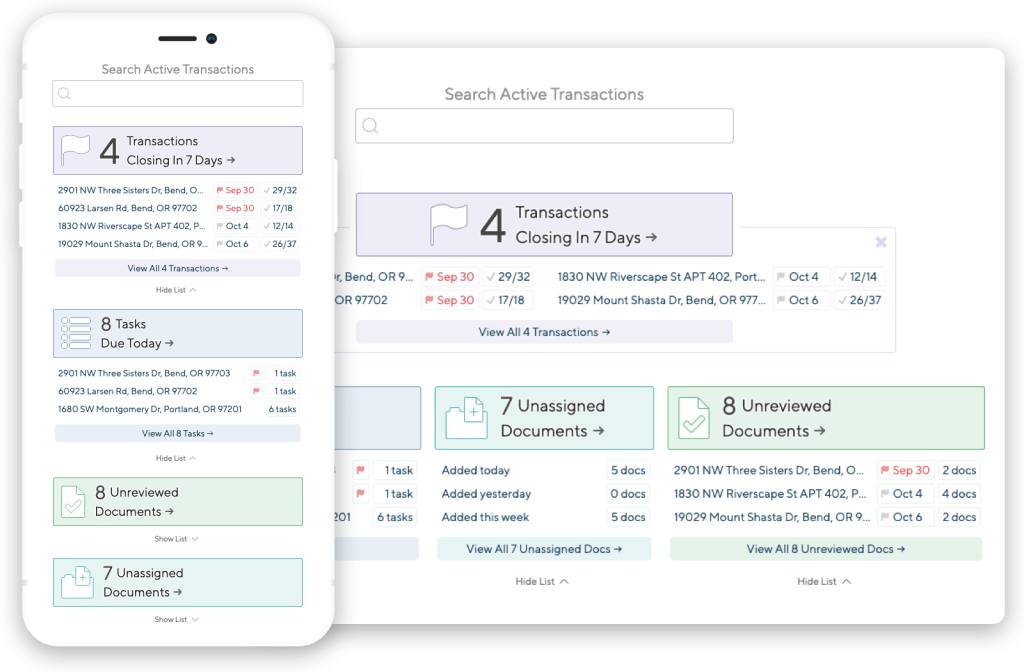
While the benefits of digital transformation in real estate are clear, brokers and agents may struggle to put all the moving parts together in a way that feels simple and manageable.
As a transaction management platform designed specifically for real estate professionals, Paperless Pipeline provides the structure, security, and operational efficiency you need to thrive in a digital-first world.
Here are just some of the ways we make digital transactions easier:
- Centralized transaction management: Instead of juggling email threads, shared drives, and paper files, every document and detail is stored in one secure place. Brokers and agents can instantly see where a transaction stands and what still needs to be completed.
- Streamlined document handling: From contracts to disclosures, documents can be uploaded, reviewed, and stored digitally. With clear checklists and audit trails, nothing falls through the cracks.
- Easy eSignatures: Clients can sign documents electronically from anywhere. This speeds up property deals and reduces the frustration of waiting for physical paperwork.
- Compliance and oversight: You’ll gain peace of mind knowing that every transaction helps you stay audit-ready. Built-in compliance tools ensure that required documents are in place, signatures are collected properly, and records are kept securely.
- User-friendly for teams: Our software is designed to be intuitive, so your team can get up and running quickly. For real estate firms, this means less time spent on training and fewer challenges when scaling.
- Better collaboration: With real-time updates and shared access, real estate organizations, agents, and clients can all stay informed and aligned. All key stakeholders know what’s happening, when it’s happening, and who’s responsible for each step.
Just take our Maximum One Realty case study as an example. Our system has helped get over 1,000 of the team’s agents to go completely paperless!
The Ultimate Tool for Maximizing Real Estate Digital Transformation
The rise of digital transformation in real estate is more than just a trend. It’s the future of how properties are marketed and sold.
For agents, it means saving time and offering clients a seamless experience. For brokers, it means maintaining oversight, ensuring compliance, and scaling efficiently without the challenges of paper-based systems.
The real problem isn’t deciding whether digital transformation is the next best move for your business. It’s choosing the right platform to make the transition smooth and sustainable.
That’s what makes us stand apart at Paperless Pipeline. By combining automated transaction management, intuitive design, and built-in compliance features, our software can transform the way you run your business.
Start your free, full-feature 14-day trial today and see how effortless transactions can be with Paperless Pipeline.