Real Estate Newsletters: A Complete Email Marketing Strategy for Realtors

Email is one of the most powerful tools in a real estate professional’s marketing toolkit. For every $1 spent on email marketing, the average return is $42.
And newsletters are the most effective campaigns realtors can send over email. In fact, real estate newsletters consistently outperform other industries in open and click-through rates.
But creating a newsletter that people want to read and engage with involves:
- Staying top of mind with clients.
- Building trust long before a transaction.
- Positioning your brokerage as an authoritative source of local housing information.
That’s a lot to think about, especially if you are busy selling properties!
In this complete guide, we’ll walk you through everything you need to launch, design, and grow a real estate newsletter that drives measurable results.
How to Create a Real Estate Newsletter Strategy
Before you start firing out emails to everyone on your mailing list, first establish a strategy.
Launching a real estate newsletter without a plan could end up being a waste of your time and resources.
Here are eight steps for creating your real estate newsletter strategy.
1. Define your goals
Outlining your goals clearly will help you decide what type of newsletter content to create, how often to send emails, and how to cater directly to your target audience.
Your goals could include:
- Increasing website traffic.
- Growing brand awareness.
- Increasing the value of sales.
- Generating more leads.
- Attracting top agents.
- Speeding up deals by educating clients.
2. Build your subscriber list
There’s no point in spending time writing a real estate newsletter marketing strategy if you don’t have any contacts to send it to.
If you have fewer than 75 contacts on your mailing list, then focus on getting more sign-ups before going any further.
Some ways to do this include:
- Add clear sign-up forms across your website.
- Give away free resources and guides in exchange for signing up to your email list. This is known as a “lead magnet”.
- Trigger an opt-in message when someone scrolls halfway down a page or moves their mouse to close the tab.
- Ask people to sign up at open houses and events.
- Add newsletter opt-ins to your contact forms.
- Mention your mailing list on social media.
- Promote your newsletter in your email signature.
- Advertise it on platforms like Meta or Google.
3. Understand your audience
It’s important to know exactly who you’re talking to and what they want to read about.
The most effective real estate newsletters are those that feel personal, in other words, tailored to the reader’s stage in their property journey and the kind of information they value most.
To do this, start by segmenting your audience. This involves breaking your contacts down into groups that respond to different content types.
Examples include:
- Buyers: Want insights into new listings, price trends, financing options, and guides that make the buying process less intimidating. Educational content like “What to Ask During an Open House” or “How to Compare Mortgage Rates” builds trust and keeps them engaged until they’re ready to act.
- Sellers: Want real estate advice on increasing property value, staging, and timing the market. Share success stories from recent sales, highlight market demand in their area, or provide a “Checklist to Get Your Home Ready to Sell.”
- Investors: Care about ROI, rental demand, and long-term market trends. Offer data-driven updates such as “Top Zip Codes for Rental Growth in 2025” or “Local Regulations Affecting Short-Term Rentals.”
- Past clients: These are your most valuable subscribers. They’re often repeat buyers or great referral sources. Send updates about local community events, home maintenance reminders, or exclusive perks for referrals.
However, you might want to be even more granular by targeting active buyers in a specific area or past clients who haven’t engaged with your newsletter for a long time.
How to segment your clients
If you already use a CRM, you likely have more data than you realize, from contact types and property preferences to transaction dates and engagement history.
You can use these data fields to segment your audience.
For example, here’s how you can identify the segments mentioned above:
- Buyers: Look for contacts marked as active leads, those who’ve enquired about listings, signed up for property alerts, or attended open houses.
- Sellers: Identify contacts who’ve requested valuations, listed a home recently, or asked about market conditions in their area.
- Investors: Tag clients who own multiple properties, have made an investment enquiry, or have downloaded ROI or rental market resources.
- Past clients: These are people whose transactions have closed. Use your transaction history or deal stage to group them for post-sale communication and referral campaigns.
If you don’t yet have all this data in one place, start tagging contacts manually as you interact with them. Most CRMs make this easy.
Over time, you’ll build clearly defined segments that let you tailor your newsletter content to each reader’s real needs.
4. Create a plan
You also need to consider the more practical elements of your newsletter campaign such as:
The frequency of your newsletters
How often will you publish your newsletter, and when is the best time to send them out?
If you’re aiming to keep buyers up to date with listing alerts, for example, it might be a good idea to email them once a day. On the other hand, once a month might be enough for general news, tips, and guidance.
Most real estate professionals send their newsletter once or twice a month. This maintains engagement with your audience, without oversaturating them.
Whatever you choose, consistency matters most. It’s better to send one great newsletter on the first Tuesday of every month than to send three in a row and then disappear for weeks.
Following a consistent schedule builds familiarity and trust among readers, which are essential to nurturing real estate client relationships.
Setting measurable goals
Track a few key metrics to see how well your newsletter performs over time:
- Open rate: Aim for 20–40%, which is typical for real estate newsletters. Strongly segmented lists can achieve even higher engagement.
- Click-through rate (CTR): A healthy range is 2–5%, reflecting how many readers take action after opening.
- Conversion rate: Measure how many readers complete the next step, whether that’s scheduling a call, signing up for a showing, or downloading a guide.
Don’t worry if your first few sends are below these numbers; what matters is improvement over time.
The content you’ll share
It’s essential to align your business objectives with the content your subscribers are interested in. Consider their preferences and the desired actions you’d want them to take after reading your newsletter.
For example, if you want to increase sales in a particular neighborhood, then consider producing a guide to that area.
This guide may include valuable insights into the best spots to eat, local coffee shops, leisure facilities, and places to visit. You could also include a roundup of the latest properties you are selling.
Here’s an example of how Smith & Berg Partners use their newsletter to highlight local attractions as well as provide details on upcoming open houses:
The email marketing platform you’ll use
Selecting the right platform is crucial for designing and sending your own newsletters, as well as tracking the outcomes of your marketing endeavors.
Mailchimp and Campaign Monitor are great email marketing tools for crafting and managing your newsletter.
Numerous monthly real estate newsletter templates are readily available, and most of the tools are user-friendly and intuitive.
5. Design your newsletter
Good design helps your newsletter get read. A clean, well-structured layout looks professional, builds trust, and draws attention to key details such as new listings, real estate trends, today’s market insights, or your call to action.
Here are some tips for achieving this:
Choose a simple, scannable layout
Most readers won’t read your newsletter top to bottom, so design for skim-readers. Stick to a single-column layout with clear sections and plenty of white space.
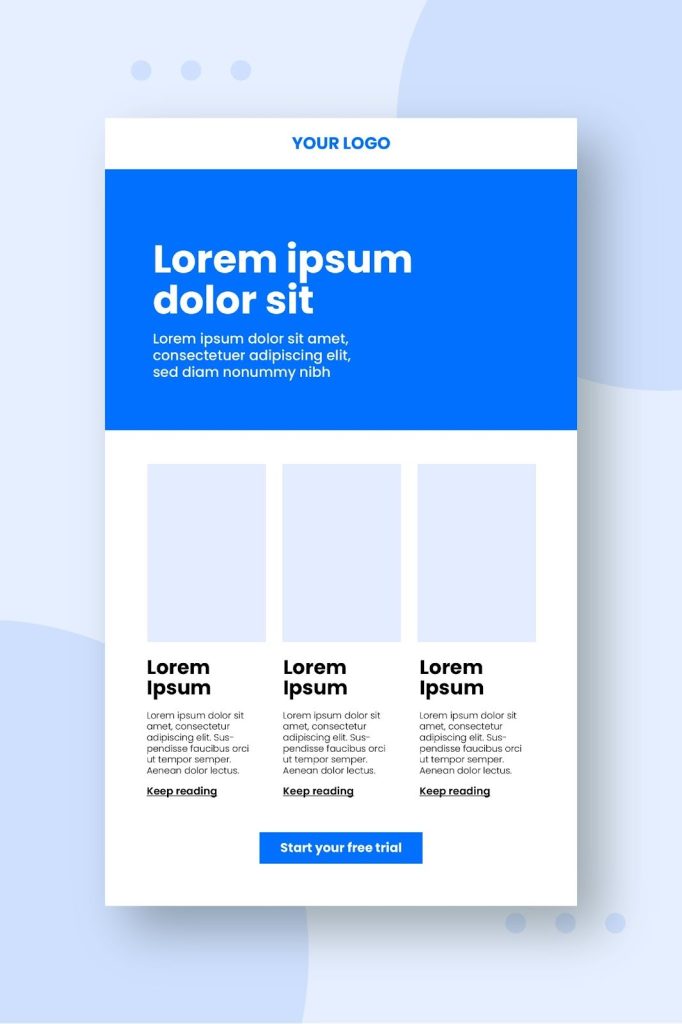
Structure your newsletter like this:
- Header: Your logo and a short tagline so readers immediately recognize who it’s from.
- Hero section: One strong image or headline that draws attention to your main story or featured listing.
- Body: Two to three short content blocks — for example, a market update, a featured property, and a practical tip.
- CTA: A clear button or link at the end (e.g., “See new listings”, “Start your free trial”).
Keep it mobile-friendly
More than half of real estate emails are opened on phones, so mobile optimization is critical.
Some of the ways to do this include:
- Use a single column and large tap-friendly buttons (at least 44px high).
- Keep subject lines under 50 characters so they don’t get cut off.
- Avoid long paragraphs by using short sentences and bullet points.
- Test every send on both desktop and mobile before publishing.
- Aim for roughly 60% text and 40% visuals; too many large images can trigger spam filters or slow load times.
Place CTAs with purpose
Every newsletter should have one clear goal, with a CTA button that reflects it. Avoid multiple competing CTAs as that can confuse readers.
Examples of strong CTAs for real estate newsletters include:
- “Browse new listings”.
- “Book a consultation”.
- “Book a valuation”.
- “Download the full market report”.
Make the call-to-action button stand out by using a contrasting color and enough space around it.
Prioritize accessibility
An accessible newsletter ensures everyone can engage with your content and improves readability.
You can do this by:
- Always including alt text for images so screen readers can describe them.
- Using high color contrast between text and background.
- Choosing clear, legible fonts and keep body text at least 14–16px.
- Avoid relying on color alone to convey meaning (e.g., red text for “hot listings”).
- Using simple, clear words and language that anyone can understand.
6. Writing engagingly
Your newsletter is a way to build trust and start conversations with your audience. Using the right tone, voice, and headlines is key to doing this.
Write the way you’d speak to a client in person: warm, confident, and informed.
Aim for a conversational but professional tone that shows expertise without sounding formal.
Some other tips include:
- Use “you” and “your” to make the reader feel directly spoken to.
- Replace corporate phrases with natural ones.
- Every sentence should make it immediately clear what the reader can learn or do next.
7. Use automation
Automation lets you keep every client engaged without adding more manual work to your week.
With the proper setup, your emails can feel personal, timely, and relevant to each contact on your list.
Here are a couple of automation strategies you can use:
Send triggered emails at the right moments
Triggered emails go out automatically when a client takes a specific action, helping you provide an instant personalized response.
Examples include:
- A “Thanks for stopping by” email after an open house.
- A “Download complete” message with related resources when someone grabs your market report.
- A friendly reminder near a closing anniversary or key milestone.
Build drip campaigns that nurture leads
Drip campaigns are a sequence of automated emails designed to guide someone from first contact to closing. They can also help you re-engage past clients or inactive leads when they’re ready to move again. Each message builds trust and moves the reader one step closer to action.
A typical drip campaign might go as follows:
- A new subscriber receives a welcome email introducing your brokerage, followed by a short guide on buying or selling in your market.
- Buyers get automated updates about financing, inspections, or a local listings update that match their preferences.
- Sellers receive value-driven content such as pricing insights, staging tips, or updates on recent sales.
Well-structured drip sequences keep your brand top of mind long after an initial inquiry, even when you’re busy with other clients.
8. Monitor and optimize
Earlier, we mentioned setting targets for your newsletter analytics using your email marketing platform. This will help you to understand what you are getting right and which areas you need to work on.
Pay attention to:
- Open rates.
- The number of people who unsubscribe.
- Click-through rates.
- Call-to-action responses.
Using these metrics will help you determine which types of content people respond to best and which they’re not interested in.
7 Real Estate Newsletter Ideas
Now you know how to launch a real estate newsletter. But what content should you include?
Here are a few real estate newsletter ideas to get you started:
New listings and price reductions
Listings are what most industry professionals want to put in their newsletters to help drive sales.
But it’s important to think about what you are sending your recipients. Overloading them with all of your listings at once will diminish the value of your newsletter.
Here are a few expert tips to get this specific newsletter strategy right:
Use personalization
If you send clients a generic list of all of your properties, then they are likely to be overwhelmed. It’s possible that they don’t have the time to scroll through all of them.
It’s a good idea to focus on sending out listings and reduced property price alerts that are tailored to individual subscribers.
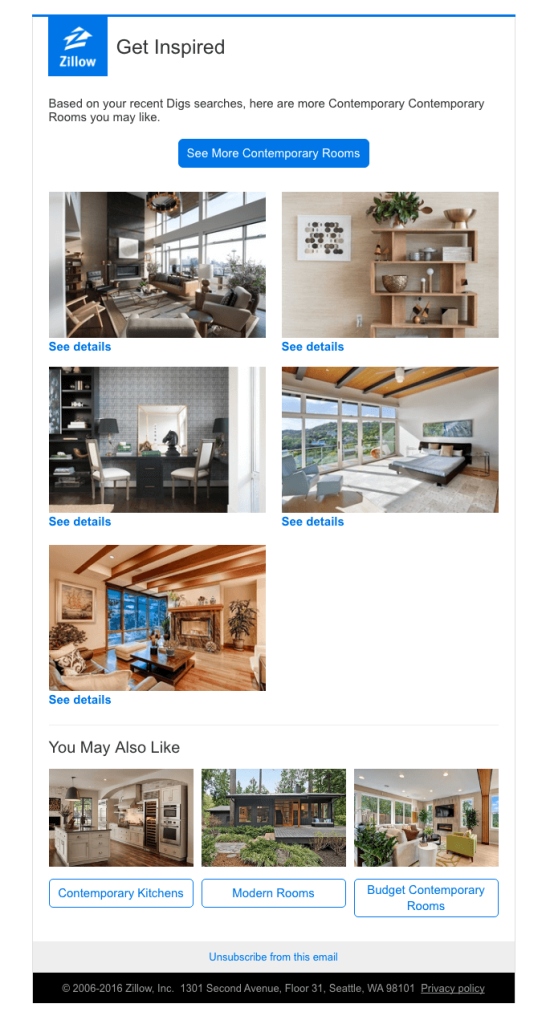
This is how Zillow uses personalization in their newsletters. They rely on people’s recent property searches to understand the types of properties a user is interested in and the style of rooms they like:
Another example from Blue Elephant Realty shows how the company sends personalized listings to potential clients:
Ray White also sends out regular newsletters with their latest listings:
Avoid outdated listings
There’s nothing more frustrating for buyers than being sent a listing that has already been sold.
Move any properties that are under offer to the ‘recently sold’ section of your newsletter.
Use sharing options
Your subscribers might know someone else who is looking to buy a home. It’s a good idea to provide sharing options within your email that will allow them to send your listings to friends and family.
Another benefit of this is that your subscribers can ask friends and family what they think of a property they’ve discovered in your listings newsletter.
The example below shows how Zillow provides sharing options in their newsletter:

Property buying guides
Your clients don’t know as much about buying and selling property as you do. Use this to your advantage and share valuable information with them via your newsletter.
Here are some ideas for guides that may be valuable to your subscribers:
- How to choose a real estate agent.
- The buying process.
- The selling process.
- The closing process.
- How to get the best property deal.
- How to prepare your home for selling.
- What to look out for when viewing a property.
- What fees need to be paid in a real estate deal.
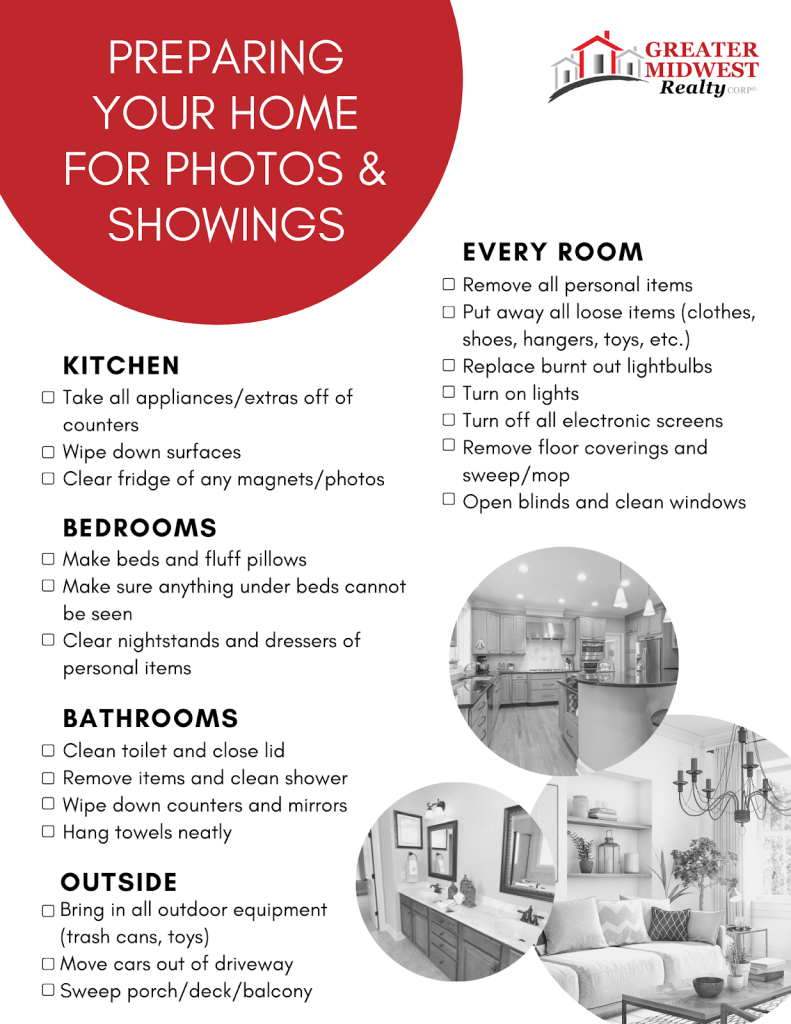
Here’s an example from Greater Midwest Realty. They have supplied a straightforward checklist to help readers prepare their homes for showings and photos:
Another example from Zillow shows how a helpful guide can be designed into a newsletter:
Guides to other services
Your prospective clients don’t only work with real estate agents when buying or selling a property. They also need to consult lawyers and mortgage brokers, for example.
You could provide guides on how to navigate these steps of a deal. Some ideas include:
- How to find the right attorney.
- Explaining mortgage refinancing.
- How to qualify for a mortgage.
- How to get the best deal on a mortgage.
You probably know attorneys and mortgage brokers in your area. You could offer to promote their services in exchange for some of their expertise for your guides. This makes your newsletter more credible and helps you build relationships with other professionals.
For example, your guide to qualifying for a mortgage could be published as an interview with a local broker you know.
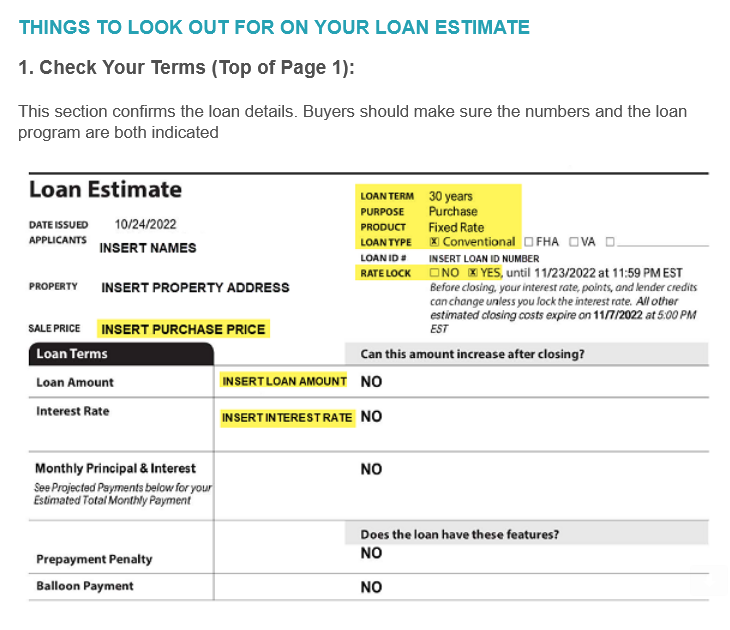
Below is an example from JVM Lending. In this newsletter, they provide tips on understanding the most important information in loan estimates and how to compare offers:
JVM is a mortgage lender, but a realtor could easily use this kind of content as it would be valuable to subscribers.
Market statistics
Data and reports give your clients a snapshot of the housing market. It helps them understand whether it’s a good or bad time to buy or sell, how much competition there will be, and in which direction the market is heading.
The more market updates are tailored to the local real estate market, the more useful it will be for your subscribers.
It also helps to demonstrate your expertise and knowledge of the current market.
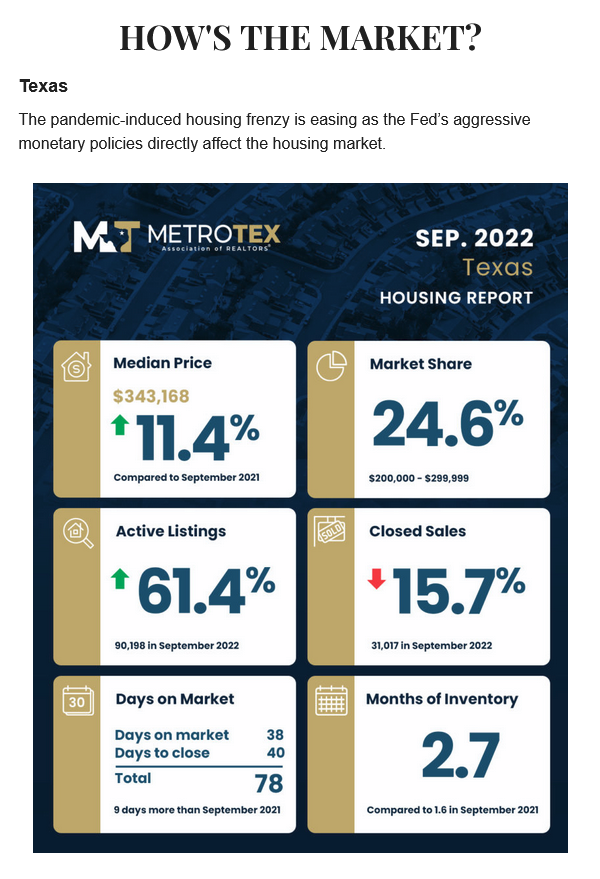
Here’s a good example from Kymberly Sims of Tenpenny Realty. Her newsletter includes this useful local market updates for buyers:
Local information
Successful real estate agents don’t just sell properties. They’re also selling a neighborhood and a lifestyle.
Inform your newsletter subscribers about fun local events, restaurants, and leisure facilities in the neighborhoods of your current listings.
Here is a great example from Asheville Realty Group. They have written about fall in their city, describing its beauty and some of the local seasonal events taking place:
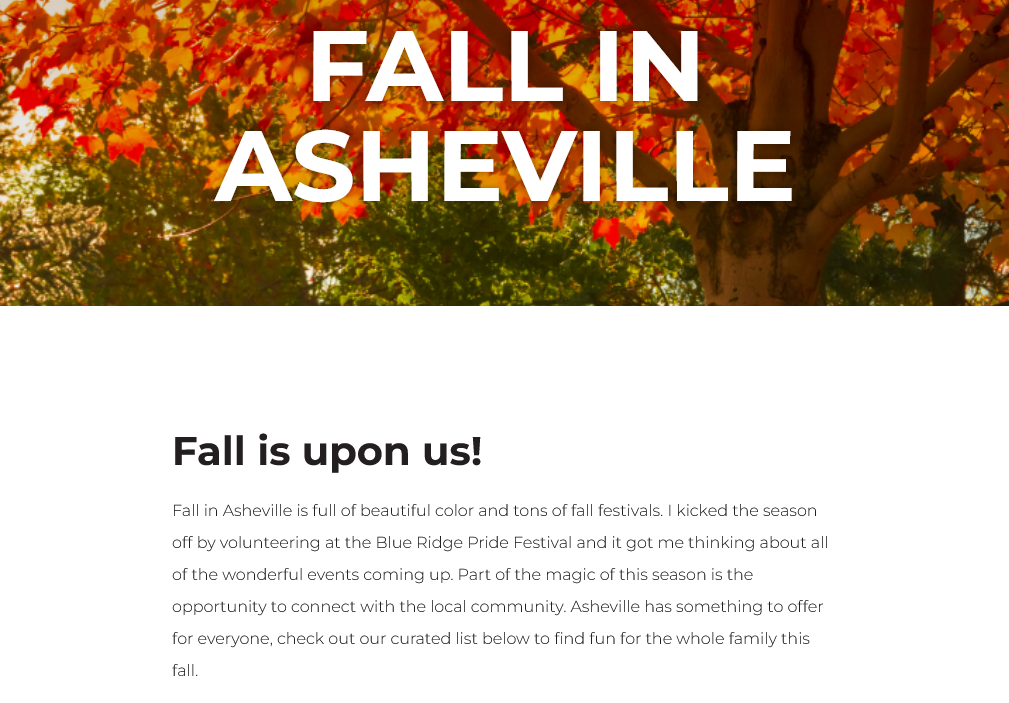
The newsletter suggests several hikes that allow people to enjoy the colors of autumn. It then lists the local events throughout the season.
Home renovation and maintenance guides
First-time homebuyers may lack prior experience with home maintenance. Tasks such as repairing leaks or cleaning gutters may be unfamiliar to them.
Even experienced homeowners may be faced with maintenance challenges when they move into a new property. For example, perhaps their new property has a pool, and they have never had to maintain one before.
You could use your newsletter to share information about home renovations and maintenance. Some ideas include:
- Seasonal garden maintenance tips.
- General home improvement guides.
- Tips for specific maintenance tasks like plumbing and electrics.
- How to hire contractors.
- Interior decor trends.
- Landscaping advice.
- Guides to certain property types, like a ranch or a colonial home.
Here’s a good example from Geni Manning. She provides a list of maintenance tips for each month:
Company updates
You can use your email newsletter to help potential clients get to know you and your business. Sharing company news and updates in your emails can help you do this.
Including personalized news showcases your expertise and enhances your credibility.
You could use your newsletter to announce:
- New staff, highlighting their expertise.
- Any new services you offer, areas you cover, or offices you’ve opened.
- Awards that you have won or been nominated for.
- Upcoming events you’re hosting.
- Charity or volunteer work that you’ve done.
5 Tips for a Great Real Estate Newsletter
Now that you understand what a good real estate newsletter looks like, let’s discuss some best practices for your emails:
1. Write a strong subject line
Your subject line is the first thing that your subscribers read, and it needs to be compelling enough to get them to open your email.
The challenge is that subject lines need to be short, as many email providers cut them off at a certain amount of characters. In other words, if you make your subject line too long, your subscribers won’t see the full text.
Here’s a good example from ZeroDown. Readers can tell immediately how this email is going to help them in their search for a home:

2. Use a branded header
A branded header ensures readers immediately know the newsletter is from you. It also looks professional.
Use your brand colors and include your company name and logo in the design.
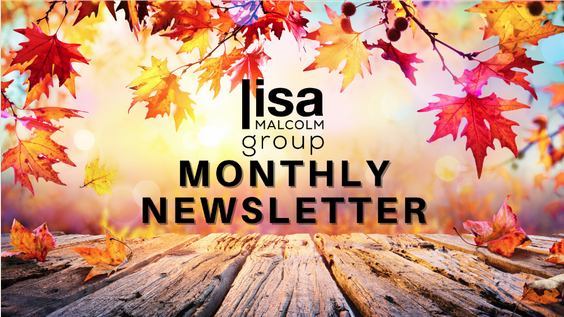
Here’s an example of a good header from Lisa Malcolm Real Estate Group’s newsletter:
3. Make it easy to read
Email users don’t have the time or attention span to read long walls of text. This may even result in them unsubscribing from your database.
Make your newsletter’s text light, simple, and easy to read. Here are some tips that will help do this:
- Keep it short: Sentences should be concise, and you should stick to one idea per paragraph. Use bullet points to make neat lists. Try to communicate in the least amount of words possible.
- Use the inverted pyramid technique: Start with the main point of your email, followed by the rest of your information.
- Use clear images with a singular point of focus: Using a single, large, and straightforward image can help avoid the perception of a cluttered newsletter, as excessive smaller images may overwhelm readers.
- Choose simple fonts: Try to avoid using more than two fonts, and ensure that you have a clear hierarchy of headings. Readers will struggle to read your text if it includes too many different fonts.
- Avoid multiple columns: The more columns you have in your design, the denser the information appears. It also makes it harder for your newsletter to be accessed via a mobile device.
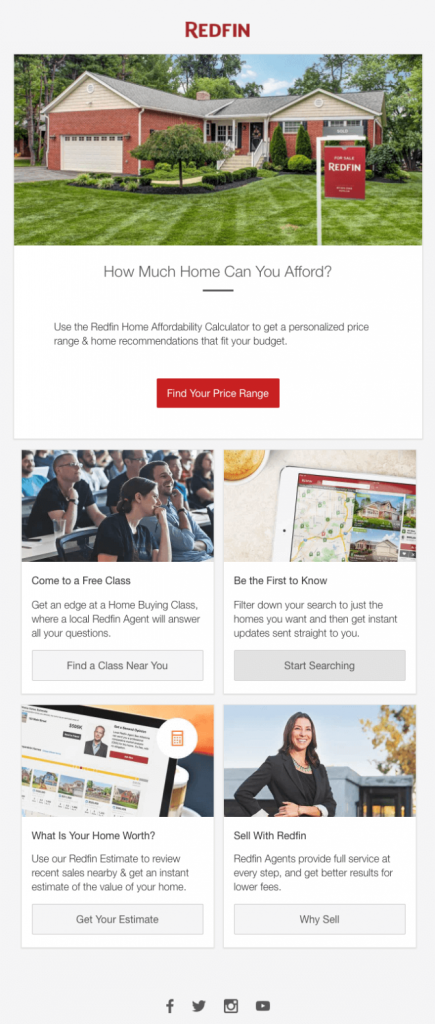
As you can see in this newsletter from Redfin, two columns are more than enough to make your email visually appealing and include plenty of information:
Source: Mail Bakery
4. Use eye-catching graphics
If you have an interesting statistic or key point you want your readers to know, use a graphic to illustrate it. This will draw the reader’s eye so they don’t miss key information.
Creating graphics for your newsletter can be challenging. However, tools like Canva are affordable and include free templates for creating your own graphics.
If you’re willing to pay extra to have a graphic professionally designed, consider hiring a freelance designer. Freelancer platforms like Fiverr and Upwork are great for this.
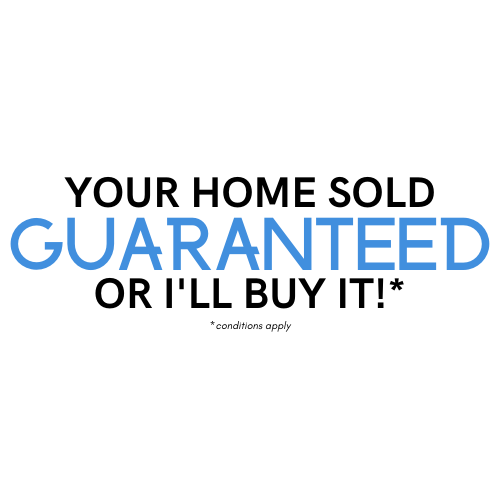
Here’s another good example from Lisa Malcolm Real Estate’s newsletter. Rather than writing a lengthy explanation, she has simply created a graphic to ensure the message is snappy and eye-catching:
5. Add clear calls to action (CTAs)
A good newsletter always inspires readers to further engage with your business. It could be by visiting your website, enquiring about a property, or getting in touch with a real estate agent. You can achieve this using a strong call to action (CTA).
Make your CTAs as clear as possible using bold text, buttons, and links.
Vonesh Real Estate Team’s newsletter is a great example of how to use CTAs effectively in your emails. Each section includes a clear blue button guiding readers to access more information on the subject of the email:
Paperless Pipeline Gives You More Time to Focus on Your Newsletters
Writing, designing, and sending newsletters takes time and effort. While there are email tools available to automate certain aspects of this process, it still demands your focused dedication.
But how do you spend time on newsletters if you’re also trying to juggle multiple transactions at the same time? That’s where Paperless Pipeline comes in.
With our software, your transaction management process is completely automated. This means you don’t have to spend time trying to manage this process yourself.
Streamlined operations give you more capacity to focus on marketing your real estate business through tactics like email newsletters. They also make running your company so much simpler.
Try Paperless Pipeline for free today by visiting our website. We’ll show you exactly how much time and effort you can save by automating your transaction management and more.