How To Generate Leads In Real Estate With Social Media

Many real estate professionals struggle to find a steady flow of qualified buyers and sellers. This could be because they’re still relying on outdated methods like cold calling or door knocking, only to end up with wasted time and few results.
Social media is one of the best lead generation strategies. Platforms like Facebook, Instagram, and LinkedIn have become some of the most effective tools for Realtors to connect with prospects and turn conversations into clients.
Interestingly, more than half of real estate agents say they now generate more leads from social media than any other channel.
In this guide, we’ll discuss how you can generate real estate leads through social media with proven strategies and examples that you can leverage to attract qualified leads and grow your business online.
12 Top Real Estate Lead Generation Tips for Social Media
Here are our top tips for getting real estate lead generation on social media right.
1. Start with a strategy
Much like you wouldn’t start a company without a business plan, you shouldn’t begin your social media marketing without a strategy.
In the past year, approximately 256 million new users joined social media, and if you want to target these people, you need a solid strategy.
Starting with a clearly defined plan will help you determine how you will market your business on social media sites and generate high-quality leads.
Your real estate marketing strategy for social media should include:
Your target audience
When you started your real estate business, you likely already knew your ideal client. Establishing this for your social media and lead generation efforts is crucial before you start. Do some research and consider your target audience’s:
- Age.
- Location.
- Interests.
- Online behavior.
For example, you may want to target first-time buyers between the ages of 25 and 35 who live in or near your city or town. You can tailor your marketing materials and content accordingly if you know who you’re targeting on social media.
Your chosen platforms
Now that you know who your target audience is, it’s time to choose which social media platforms you’ll be using. You should decide on these based on where your target audience spends most of their time online.
For example, the average age of Facebook users is 25 to 34, whereas most TikTok users are 18 to 34. Select the platforms you’ll be active on based on what you know about your target audience.
Keep reading to learn more about choosing the right social media platforms for your business!
Your content pillars
Content pillars are the categories that your posts will fall under. They help you maintain focus in your messaging, and they allow you to create highly relevant content for your target audience, establishing you as a trusted expert. When deciding on content pillars, ensure they align with your business goals.
The most common content pillars people use are:
- Informative.
- Educational.
- Entertaining.
- Inspirational.
- Promotional.
Once you know your pillars, you can start creating content that falls into each category.
Later in this article, we’ll share the best kinds of content for a real estate professional to post, so stay tuned.
The dates and times that you’ll post
To get your content seen by as many people as possible, you need to determine the right times for your posts to go live. Although social media algorithms are constantly changing, the best times and days to post in the real estate industry are:
- Instagram: Saturdays from noon to 9 pm.
- X (formerly Twitter): Wednesdays and Fridays between 9:00 am and noon.
- LinkedIn: Mondays from 9:00 am to 3:00 pm.
- YouTube: Fridays and Sundays from 6:00 pm to 9:00 pm.
How you’re going to nurture leads
The last part of your strategy to consider is what you’ll do once you’ve generated a real estate lead. When a prospective client approaches you on Facebook, for example, where are you going to direct them for more information or to set up a meeting with you?
You could:
- Set up a custom landing page where they can find more details about your business and listings.
- Direct them to a calendar app to book a meeting with you.
- Get their contact details right away and get in touch with them promptly through email marketing campaigns.
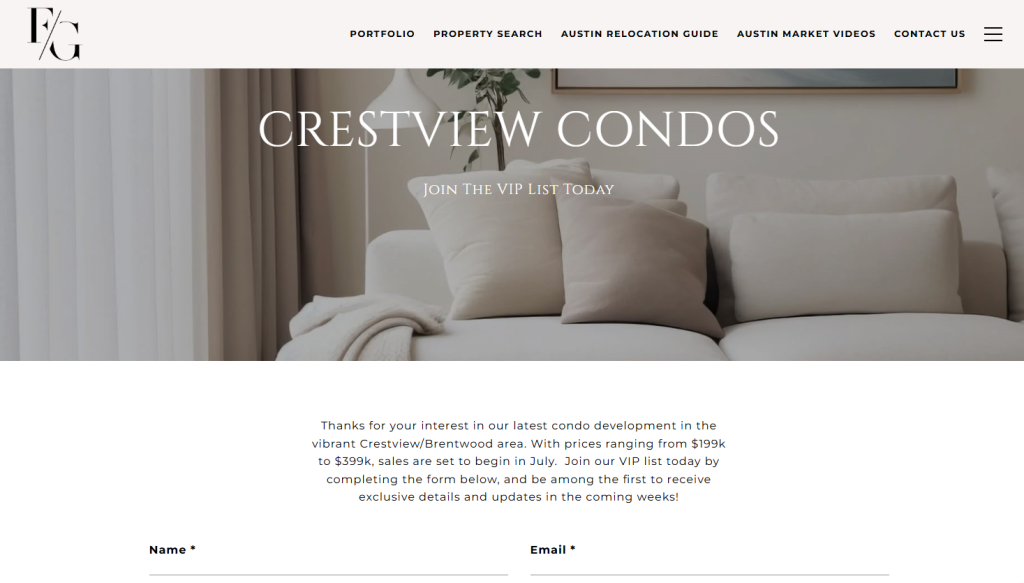
For example, the Fenton Grossman Group has a landing page that they direct social media users to collect contact information and begin the lead nurturing process:
2. Choose your social media channels
As mentioned above, the best social media site is the one that your prospective clients use. This means that Facebook, Instagram, LinkedIn, and YouTube are top choices for Realtors looking to build a social media presence.
Here is a rundown of what makes each real estate social network useful:
Facebook: Best for business profiles and messaging
Facebook is by far the most used social network by Realtors, and it lets you create an impressive real estate business profile.
You can also use the platform’s communication tools, such as Messenger, to talk directly to prospective clients. Messenger has over 1 billion users, making it the ideal platform to communicate with potential clients.
Instagram: Best for photos, stories, and reels
There are fewer business profile options on Instagram, but it’s a great place to share images and short videos of your properties.
Instagram is owned by Meta, which is the same company that owns Facebook. You can use their Facebook Business Manager platform to create targeted ads for both sites.
LinkedIn: Best for industry networking
With 1.15 billion monthly active users, LinkedIn is another platform to help you expand your professional network and increase your industry authority. However, it’s not necessarily a great option for connecting with potential buyers or sellers.
However, LinkedIn offers huge opportunities to network with other real estate agents and brokers, and to establish your authority in your field.
YouTube: Best for video content
There are plenty of successful real estate YouTubers, and some of the biggest contributors have hundreds of thousands of followers and millions of views.
There’s plenty of room to create a niche YouTube channel to build authority in your area, and it’s also an easy and free way to host and share video listings of your properties.
It’s a powerful platform to use because 44% of people are more likely to purchase a product or service after seeing a video about it.
3. Publish the best types of content
The content you post is key to a successful real estate social media strategy, and you have plenty of options for the type of content you can publish.
Here are some social media post ideas based on what popular Realtors are posting about:
Listings
Listings are central to most real estate social media strategies, and this is the type of post that attracts people looking to buy, which would fall under your promotional content pillar.
Both Facebook and Instagram allow you to upload multiple photos in a single post. Make sure the most eye-catching one is the primary photo, then supplement this with other images.
Also, ensure you add a description. While the photo attracts potential customers, it’s the description that provides the details they need to take the next steps. Include practical elements like rooms, square footage, price, and next steps.
You may want to consider adding a link to where users can find virtual property tours for your listings, as this enhances their experience.
The post from Luxury Living Chicago below is an excellent example of a listing on Instagram. It includes plenty of high-quality photos and contains all the information a buyer needs:

Social proof
Did you know that 88% of consumers trust online reviews as much as personal recommendations? In fact, 86% of people consider reviews to be an essential resource when deciding which businesses to support.
Social proof posts, like success stories and reviews, show potential clients that you are good at what you do and that people enjoy working with you. It can also encourage repeat business and helps build relationships with new clients.
Real estate agent Dusty J. Baker shares an image on his Instagram feed whenever he successfully sells a property. It’s a simple yet powerful sign of success:
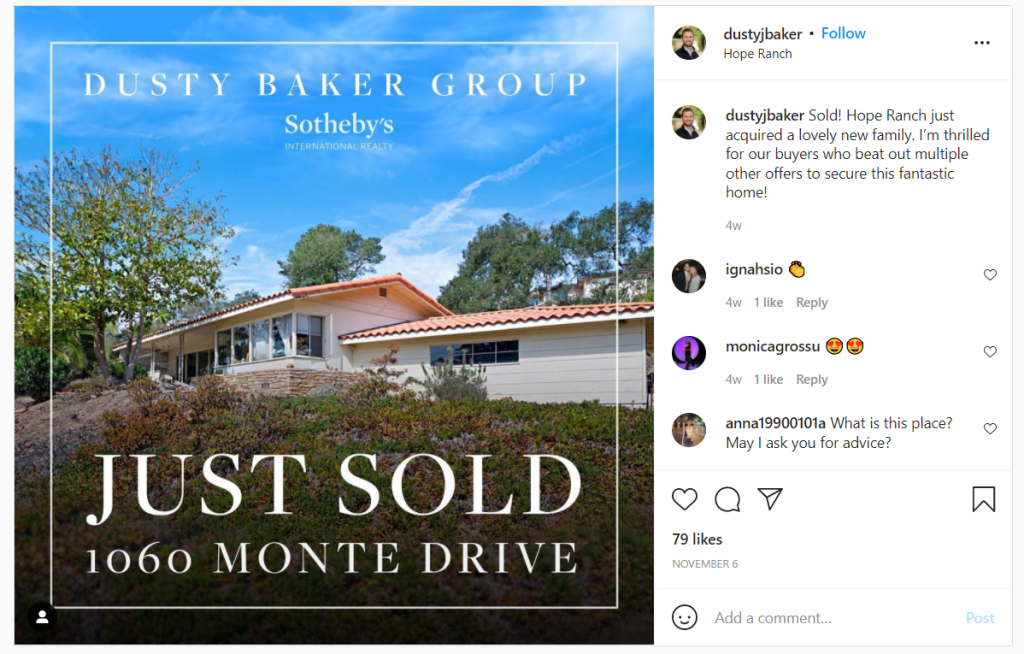
Like listings, social proof falls under the promotional content pillar of your strategy.
Humorous content
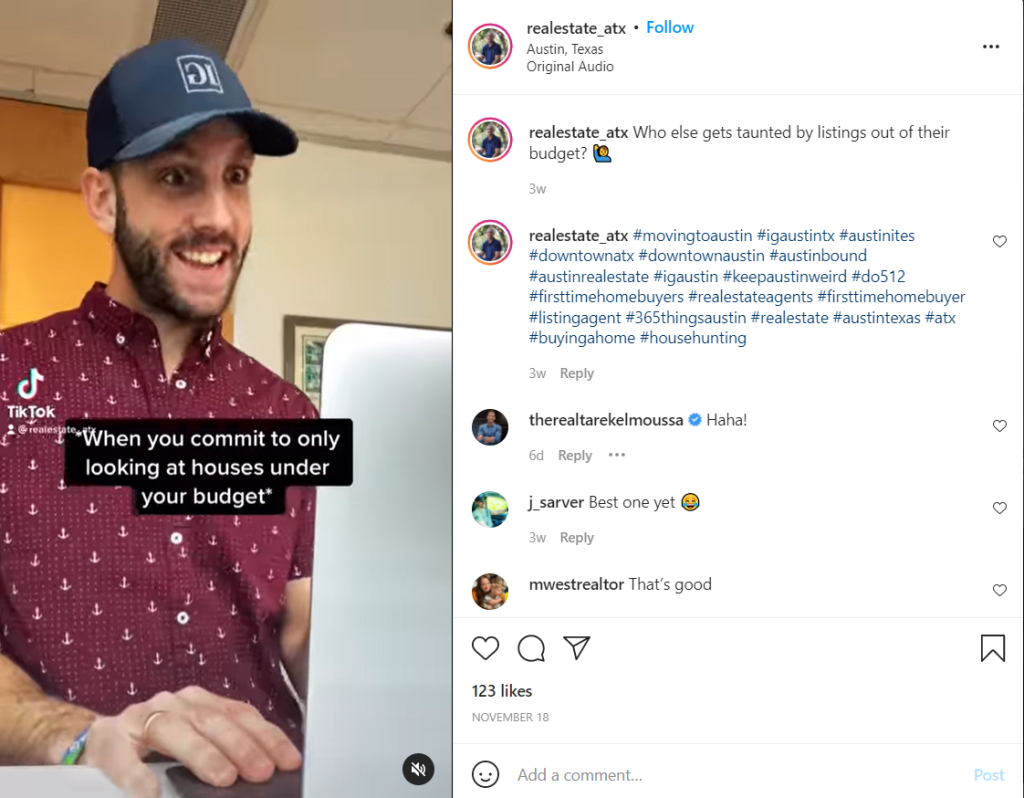
This next type of post isn’t for everyone, but some Realtors find success with humorous content, which would fall under your entertaining content pillar.
The humorous example below from Ian Grossman works because it is relevant to the challenges home buyers face:
Personal posts
Over 80% of consumers say that authenticity influences their buying decisions, and people are more likely to support businesses they can trust.
Personal posts are a way to show potential clients your human side. They are appropriate when your social accounts are for your own brand rather than a real estate agency.
The post below from Joy Cerey is a good example. While the majority of her posts are of the luxury homes she sells in L.A., she adds in the occasional personal update:

Tips and guides
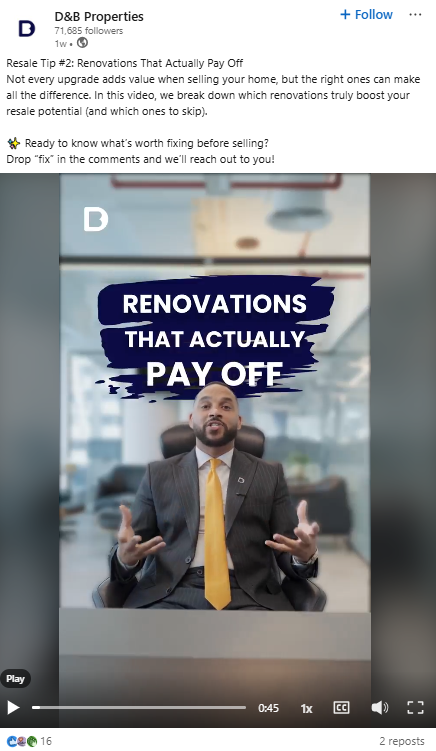
Realtors often post real estate tips and guides to help clients with the selling or home-buying process, which is considered to be educational content.
To cover this category, you could create property guides for your area, provide renovation tips, or list things people should prepare before buying or selling real estate.
This helpful guide from D&B Properties is a good example. It tells sellers what they need to know about home renovations and how they pay off:
Local market trends and industry posts
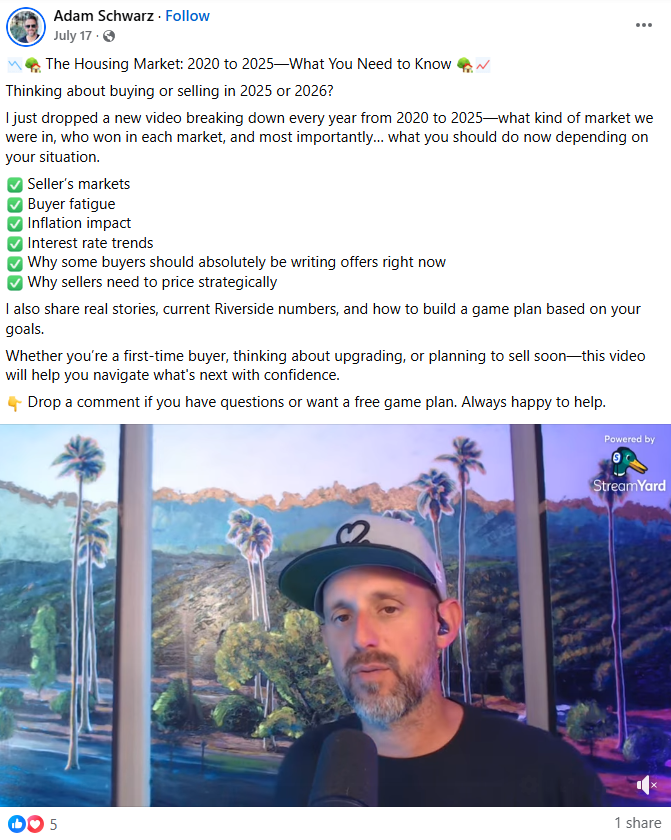
Posting about the real estate market and relevant trends can help your real estate business establish authority in your industry and niche.
When you share market insights and similar content, it shows people that you know what you’re doing and positions you as the go-to expert on that particular topic.
Here’s an example from Adam Schwarz with market-related content that helps him establish authority on Facebook:
Showcase local businesses
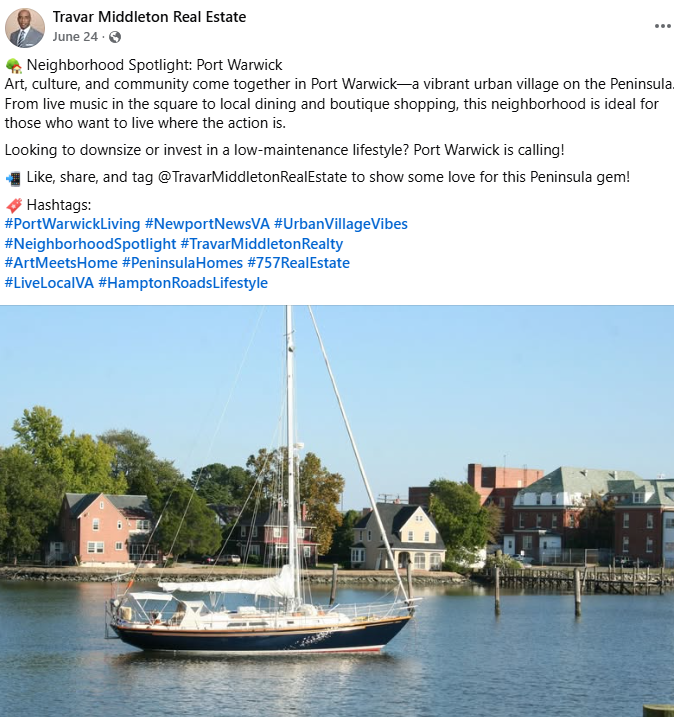
You can share an informative post by highlighting local businesses, attractions, and activities.
This may just be the final thing that convinces a potential client to decide to buy in your area (and use your real estate services to do so).
Here’s an example from Travar Middleton Real Estate that promotes the neighborhood the firm serves:
Open houses
If you have an open house or other local events coming up, it’s an excellent idea to post about them on social media.
Not only are you attracting more people to your open houses or local community events, but there’s a high potential for landing new clients.
Here’s an example of a post by Marvin Sapp promoting an open house to prospective buyers:

4. Optimize your profile
When someone sees your content and wants to learn more about you, the first thing they do is visit your profile. For this reason, it’s important to make it as easy as possible for people to contact you once they’ve reached your profile.
For example, on Facebook, fill out your About section so your website, phone number, and address are visible. This is important for search engine optimization (SEO), as this tactic will ensure your details display on search engines like Google.
Consider using a professional profile picture and banner image, and add profile calls to action (CTAs) highlighting how people can get in touch. The WhatsApp button in the profile below for London Real Estate Group is a nice touch:

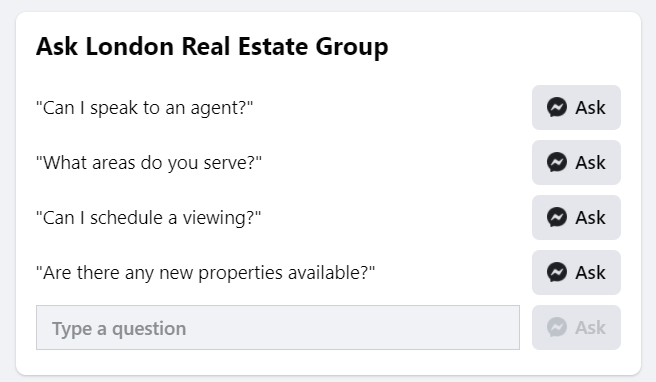
You should also set up Facebook Messenger, which makes it easy for people to contact you via the platform. You can even add frequently asked questions (FAQs) to your profile and set up basic chatbot automation to help people find answers to common queries:
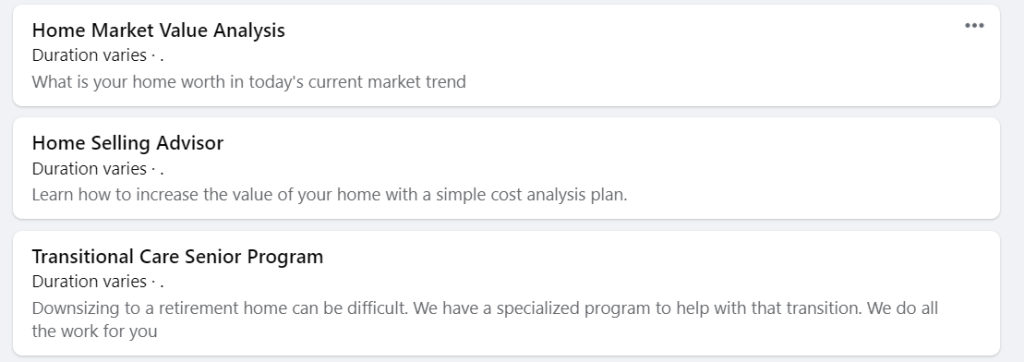
Another helpful option on Facebook is the ability to add information about the services you provide. Be sure to fill this in so your clients understand your offerings, and you avoid missing out on business opportunities:
Instagram provides slightly fewer options for creating a profile, but you get a place to add a short biography and links, and there is room to give your audience all the key information.
Use the bio to add a short introduction to your business, and include your phone number and email address.
Ian Grossman’s profile below is a great example for real estate industry professionals:
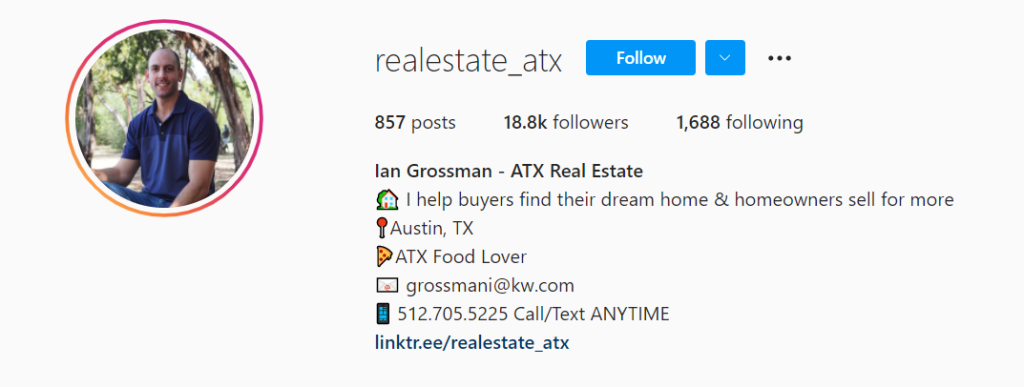
You could add your website to the URL section, but adding a URL to an Instagram LinkTree is a better option.
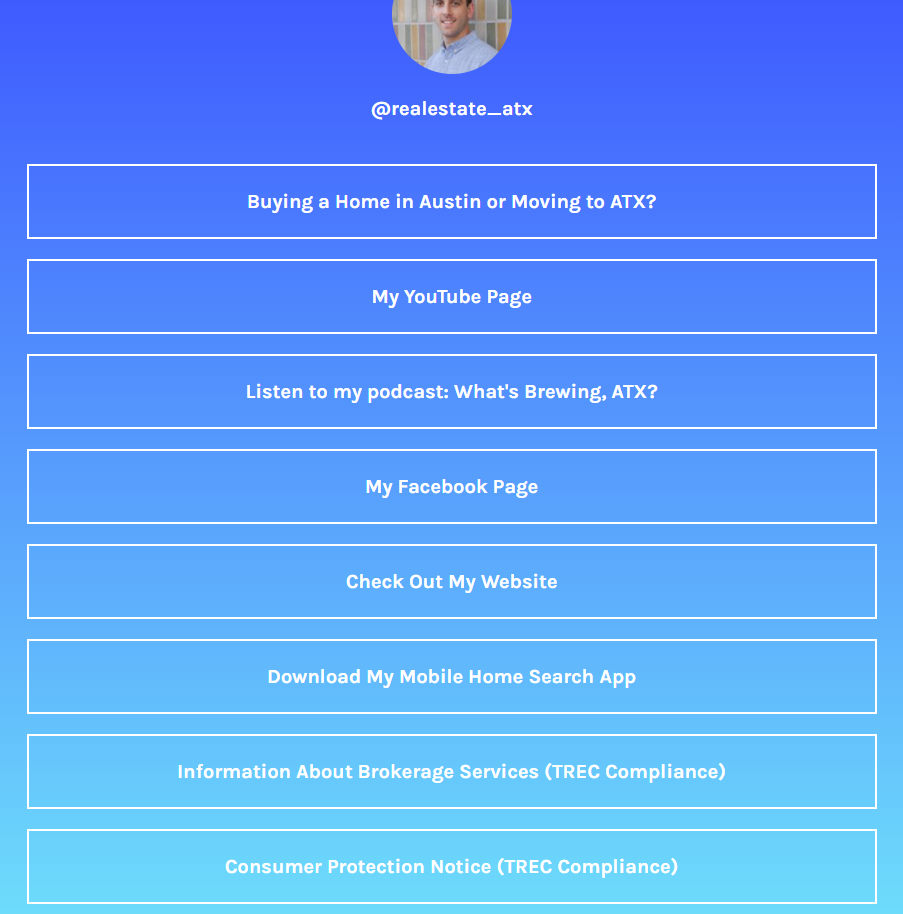
LinkTree is a popular free tool that enables you to direct users to a separate landing page with links to all your important content. Typically, this includes your website, other social media platforms, and most recent listings.
Ian Grossman’s link tree is set up just as well as his profile:
5. Respond promptly
Being visible on various social media platforms means you’ll get people contacting you on them, and how you respond will impact whether you generate real estate leads or miss an opportunity.
Speed is perhaps the most important factor, as 80% of consumers expect a response within 24 hours on social media.
Responding quickly also reduces the chance that the customer will look for another real estate agent or broker to do business with.

This can be tough if you have multiple social media accounts set up, so ensure you have app notifications turned on so you know when someone is reaching out.
It can also help to have a list of your own questions that you know will nudge prospects down your real estate sales funnel when they contact you on social media. Examples of these questions include:
- Do you own a home?
- Do you have a mortgage preapproval?
- Which neighborhoods are you interested in?
You can also use customer relationship management (CRM) software to manage and respond to incoming messages. This would be a more suitable option if you receive a large volume of social media messages each day. Some of these tools include:
6. Join social groups and become an active member
Social networking groups are good places to communicate with people who may be interested in your services. Over 1.8 million people now use Facebook groups each month, giving you a massive audience to engage with.
Finding the forums, pages, groups, and communities your target audience uses is key. These could be groups where people discuss tips and tricks for buying homes, like the one below:
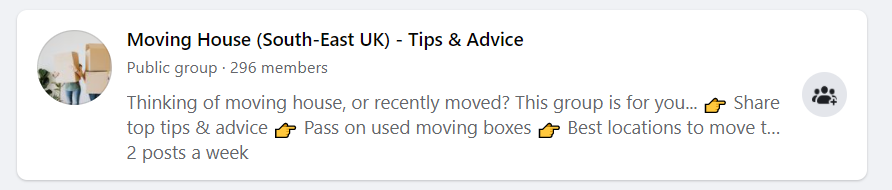
Or they could be area groups related to the local market in which you operate. These groups are typically on Facebook, or your area may also have a community on neighborhood platforms like Nextdoor.
How you communicate in these groups is key to your success. Don’t advertise your service straight away unless this is explicitly allowed, as this will not generate warm leads and may annoy other group members.
Instead, wait for opportunities to provide value, like offering real estate advice whenever someone asks an industry-related question.
7. Consider the post-click experience
The post-click experience is an essential part of real estate marketing. When you post content on social media, you aim to encourage people to take the next step toward becoming clients.
Make this easy by providing contact information and links in your posts, and add precise instructions and CTAs so people know how to take the next step. If you use your posts to direct people to your website, think carefully about where you send them.
You may miss out on lead generation opportunities if you only send them to your business’s home page. Instead, ensure the page is relevant to the post they’ve clicked on.
For example, when adding links to posts about listings, make sure the link takes the user to the listings page on your website. If you don’t have dedicated listing pages, direct users to a landing page that clearly outlines the steps they should take to learn more about the property.
Here’s an example from Berkshire Hathaway HomeServices of a landing page that tells users exactly what to do next, which is to find an agent:

Similarly, posts related to selling a property should take people to pages that contain more information about how to do this.
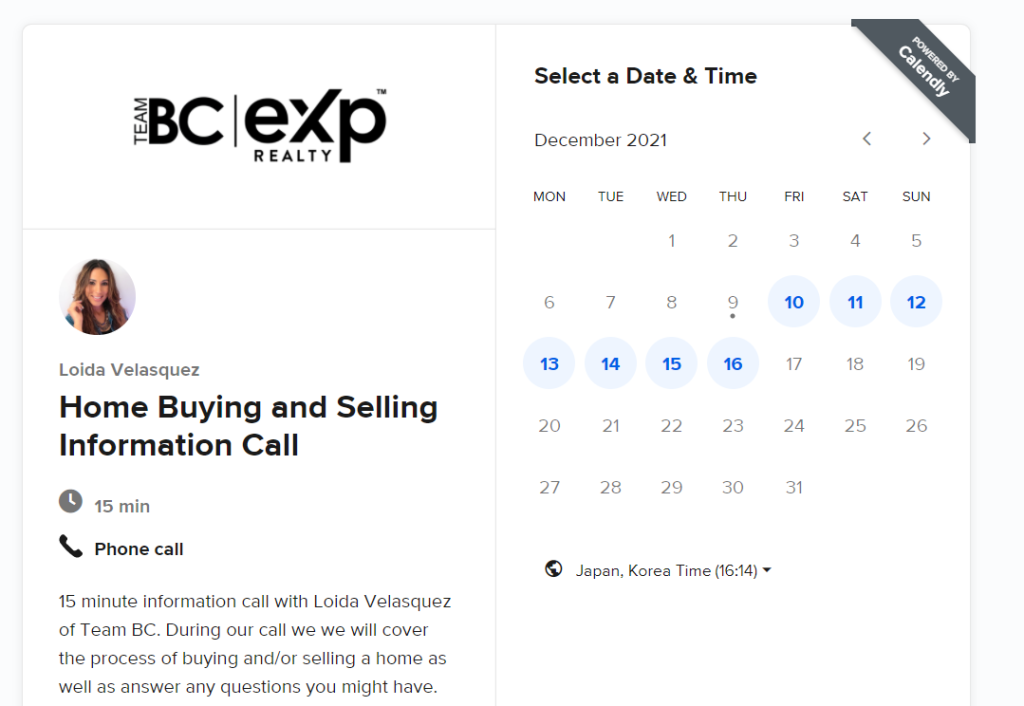
Here’s a great example from Loida Velasquez. She has specific pages for each link in her link tree. For example, if you click on “free buying or selling consultation,” you are directed to an easy-to-use calendar page that tells you exactly what to expect and lets you quickly book a meeting:
8. Talk about your area as well as your properties
We don’t need to tell real estate agents and brokers about the importance of location when selling a home. But it’s worth reiterating: make sure you spend significant time selling the property’s location when creating social media content.
There’s another good reason to create content relating to your area: these posts have a far longer lifespan than posts about a property.
Think about it: listing posts are only helpful for as long as the property is up for sale. Sometimes, this can be a matter of days (or less). You also don’t want expired listings visible on your social media pages.
However, areas and neighborhoods don’t change, at least not as quickly as individual houses. This means any content you create that sells a specific area is evergreen, and it’ll keep its value over time.
9. Schedule your content
We know that being active on social media can take up a lot of time, and it’s easy to let your content creation efforts slip as you focus on other parts of your real estate business.
A good way around this is to schedule your social media content in advance. For example, you could dedicate a regular chunk of time to creating all the posts you will share over the following week.
Nearly 50% of social media professionals prefer to schedule content at least a month in advance, and for a good reason. Scheduling means you’ll keep your social media content pipeline full, and batching your posting efforts into a single time slot can save you time.
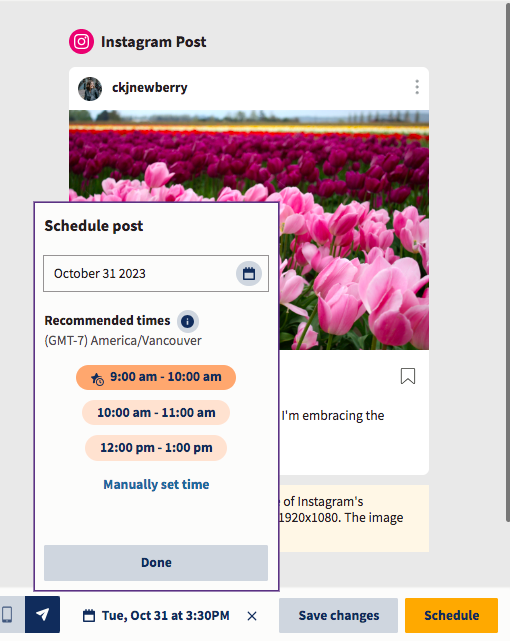
You can schedule posts with a third-party app such as Hootsuite by creating the post within the app and deciding what time you want it to go live:
10. Repurpose content
Repurposing content is another effective time-saving strategy. Instead of creating new content for each social platform, you publish optimized versions of the same content on each one.
Currently, over 94% of marketers already repurpose their content, and in many cases, you can reuse the content in exactly the same way on each site.
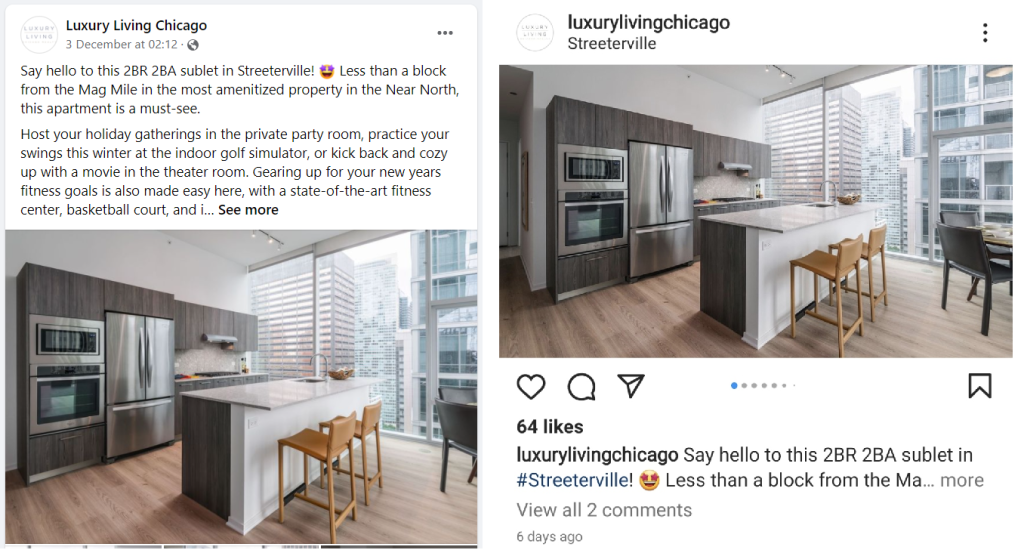
For example, Luxury Living Chicago posts the same content to both its Instagram and Facebook accounts:
You can also optimize posts to make them suit the platform you are posting to. For example, you could:
- Publish a link to a blog post on Facebook.
- Post a summary of the post on LinkedIn.
- Share the blog post’s key takeaways by displaying them in a series of images on Instagram.
This strategy works for all types of content. For example, you can publish videos on YouTube and Facebook in their regular widescreen aspect ratio, then publish versions cropped to a portrait ratio on your Instagram reels or TikTok.
11. Use social media real estate ads
The best thing about doing your own social media marketing is that the cost is significantly lower. But paid social media ads are an excellent option if you’re willing to spend a little extra to guarantee more views.
We’re big advocates of Facebook ads, and here’s why:
- They’re inexpensive: Email marketing tool Constant Contact found that Facebook ads for real estate generate 44 leads per ad, with a cost of just $2.44 per lead.
- They offer a quick return: They’re easy to set up and generate results quickly. Even a beginner can create a campaign and start generating buyer or seller leads in days.
- They have a huge reach: Facebook ads can reach 62.6% of all Americans aged over 13, which is a potential audience of over 200 million people.
- They’re targeted: The platform offers a range of targeting options that allow you to hone in on your ideal clients. Most importantly, you can choose which area to target with ads.
Of course, Facebook isn’t the only option for social media advertising. But it has the most users of any social network, so it’s the best place to start. Check out our guide to Facebook ads to learn how to use them correctly.
12. Measure, track, and analyze
Measuring the performance of your posts is the best way to see which type of social media content drives the best results. This is crucial if you have limited time and need to get the biggest bang for your buck.
The good news is that most social platforms provide a ton of data about how your posts perform. Here are some things to focus on:
Choose the right metrics
Lead generation and sales are the most critical metrics for real estate businesses, so you should prioritize tracking these.
Don’t focus too much on metrics such as likes or organic views, as these won’t always result in clients. For example, posts targeted at a specific buyer may only result in a handful of likes but could generate multiple real estate leads.
Consider the types of posts that perform well
Once you’ve settled on which metrics you will track, you can look for the types of social media posts that are generating these results and then double down on creating more of this content.
For instance, if your listing posts are generating interest, publish more of them. If people like your videos talking about tips for selling homes, lean into this type of content.
Monitor your different platforms
You may have more success on some platforms than others, and focusing on the social media sites that generate results can save you time.
If you’re having great success with Facebook but not with TikTok, consider going all-in on the former. You’ll generate better results by posting more on platforms that work for you rather than those that take up your time without producing results.
Elevate Your Real Estate Business with Software Designed for You
Learning how to generate leads is the first step. The real challenge begins after a lead turns into a transaction, including tracking every detail, managing paperwork, and keeping deals moving smoothly.
While social media helps you fill your pipeline with new opportunities, Paperless Pipeline makes sure those opportunities turn into closed transactions.
More than 90,000 real estate professionals already use our software to simplify their operations and scale their businesses.
Start your 14-day free trial to see how Paperless Pipeline helps you turn social media leads into lasting success.